
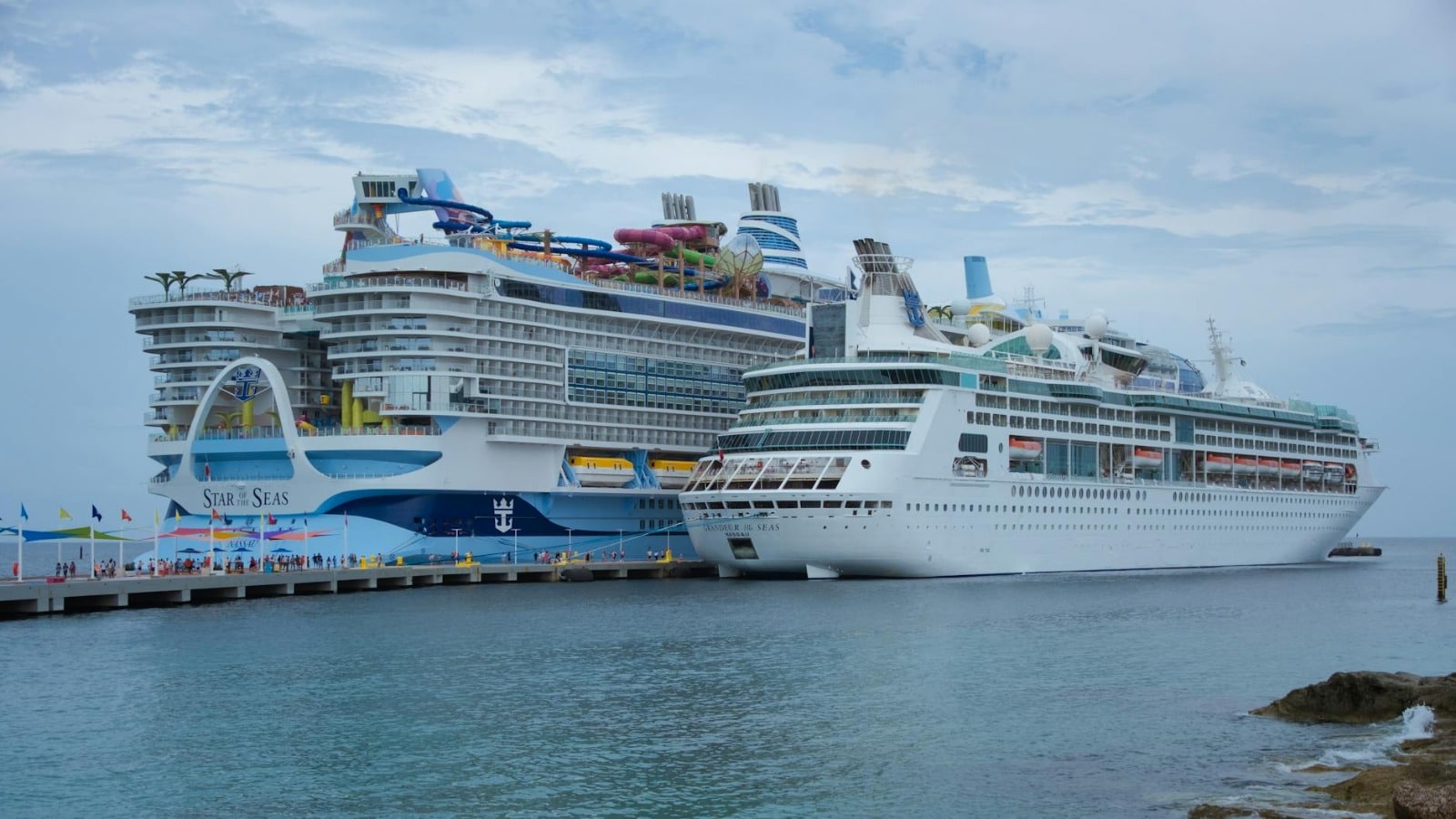
Royal Caribbean Group just posted another blockbuster quarter, with $4.5 billion in revenue and roughly $0.9 billion in net income for the first three months of 2026. Those headline numbers got cruisers reaching for a calculator, and a breakdown making the rounds on social media asked a simple question: once you strip away the billions, how much does the company actually pocket from each person who walks up the gangway?
The answer, based on Royal Caribbean’s own full-year figures, is about $452 per passenger. Here’s how that number breaks down, why some people argue the cruise line loses money on your fare, and what it means if you’re the one handing over the cash.
What Royal Caribbean Makes Per Passenger
To get a per-person figure, you take Royal Caribbean Group’s full-year results and divide by the number of people who actually sailed. Across all three of its brands (Royal Caribbean International, Celebrity Cruises, and Silversea), the company carried about 9.45 million guests in 2025, pulled in $17.935 billion in total revenue, and reported around $4.3 billion in net income.
Run the division and the average cruiser looks like this:
| Per Passenger (Full-Year 2025) | Amount |
|---|---|
| Passenger ticket revenue | $1,299.91 |
| Onboard and other revenue | $598.77 |
| Total revenue collected | $1,898.68 |
| Operating and overhead costs | $1,446.85 |
| Net profit | $451.83 |
So for every guest who boards, Royal Caribbean keeps a little over $450 once fuel, food, crew payroll, marketing, and everything else is paid. Take a family of four on a week-long sailing and the company walks away with roughly $1,800 in profit after the last ribeye and every drop of fuel is accounted for. That figure runs higher on a premium brand like Silversea and lower on a budget-friendly Caribbean week.
Do Cruise Lines Really Lose Money On Your Fare?
Here’s the part that set the social media thread off. The average cost to run the business works out to $1,446.85 per passenger, while the average ticket brings in just $1,299.91. On paper, that looks like Royal Caribbean is roughly $147 in the hole the moment you book.
That math is misleading, though. The “cost per passenger” figure bundles in things like corporate overhead, depreciation on multi-billion-dollar ships, and interest on debt, expenses the company carries whether your specific cabin is full or empty. The real cost of adding one more guest to a stateroom that’s already sailing is low, and your fare comfortably covers it.

Photo by Leonardo Yip on Unsplash
What is true: the base fare alone isn’t where the profit lives. Cruise lines keep ticket prices aggressively low to fill every cabin, and Royal Caribbean’s ships routinely sail above 100% occupancy. Full-year load factor hit about 110% in 2025, since cabins regularly pick up third and fourth guests. The money shows up somewhere else.
The Onboard Spending Is Where The Money Is
That somewhere else is everything you buy after you’re aboard. The average passenger spent $598.77 on onboard extras in 2025, close to half of what the ticket itself costs. Drink packages, Wi-Fi, the casino, the spa, specialty dining, shore excursions, it all adds up, and most of it is high-margin.
Once the ship leaves port, you’re a captive audience for the next week. There’s no wandering off to a cheaper bar down the street. That $14 cocktail, the internet package, the steakhouse cover charge: most of it drops straight to the bottom line. Drink packages are the headline example, and we’ve gone through whether that math actually works in your favor more than once.

Royal Caribbean has also gotten very good at collecting that money before you sail. Nearly half of its onboard revenue in 2025 was booked pre-cruise, most of it through the app and website. By the time you’ve packed a bag, you may have already paid for the drinks and excursions you’ll “spend” on vacation. Keeping daily gratuities separate from the headline fare works the same way. It keeps the advertised price low while the real total creeps up, which is exactly why we tell first-timers to budget for tips up front.
What This Means For Cruisers
None of this makes a cruise a bad deal. A $452 profit on a vacation that includes your room, your meals, and your entertainment for a week is hardly highway robbery, and it’s part of why cruising still undercuts a comparable land resort. But the numbers are a useful reminder of where the pressure is.
If you want to cruise without quietly handing over that onboard $599, the spending is the lever you control. The fare is mostly fixed once you book; the extras are not. We’ve written before about which costs sneak up on first-time cruisers, and a sailing where you skip the package you won’t use is a sailing where you, not Royal Caribbean, keep the difference.
I’d watch the onboard line especially if you’re a lighter drinker. The drink package only pays off if you’re genuinely putting away enough to clear the daily price, and plenty of cruisers buy it out of habit rather than need.
What To Watch Next
The trend points one direction: up. Royal Caribbean is adding roughly 7% more capacity in 2026, expects double-digit revenue growth, and keeps reporting that pre-cruise spending is climbing year over year. More berths and more upselling mean that per-passenger profit number is unlikely to shrink anytime soon.
The next earnings reports will show whether guests keep spending at the same clip, especially as new ships like Star of the Seas and the upcoming Legend of the Seas come online with even more to buy once you’re aboard. For now, the takeaway is simple enough: the cruise line makes its money on the ship, not on the ticket. So how much do you actually spend onboard once you’ve sailed away, and do you think you’re getting your money’s worth?

They don’t make a lot on me… I don’t drink soda and am fine and comfortable drinking water, so I don’t get the drink package OR purchase additional drinks. I also don’t do the specialty dining. I did Bingo once, but not interested in digital bingo or playing against others playing many cards on iPads, so will never do it on the ship again. The only thing I do end up purchasing a few of, are photos. I don’t do upcharged spa treatments and wear very little jewelry. I go for the experience, not for the add-ons, so I am not their ideal customer.
Nothing wrong with that, going for the experience alone is the best! Thank you for your input! I might try the SPA for the first time on a cruise this year
It is interesting about the gratuities. We went on Holland America around the Mediterranean and were charged gratuities each day $22 US each, which you can double in our currency. The on line chat time says that Aus and NZ already pay for gratuities with the fare at the beginning so did we pay double again as nobody told us , as in the chat time with the Royal Caribbean. If this is true who’s responsible to tell us. The travel agent, the cruise line or someone else. Or does that not apply in our case. We sailed about 2 yrs ago. Look forward to hearing from you.