
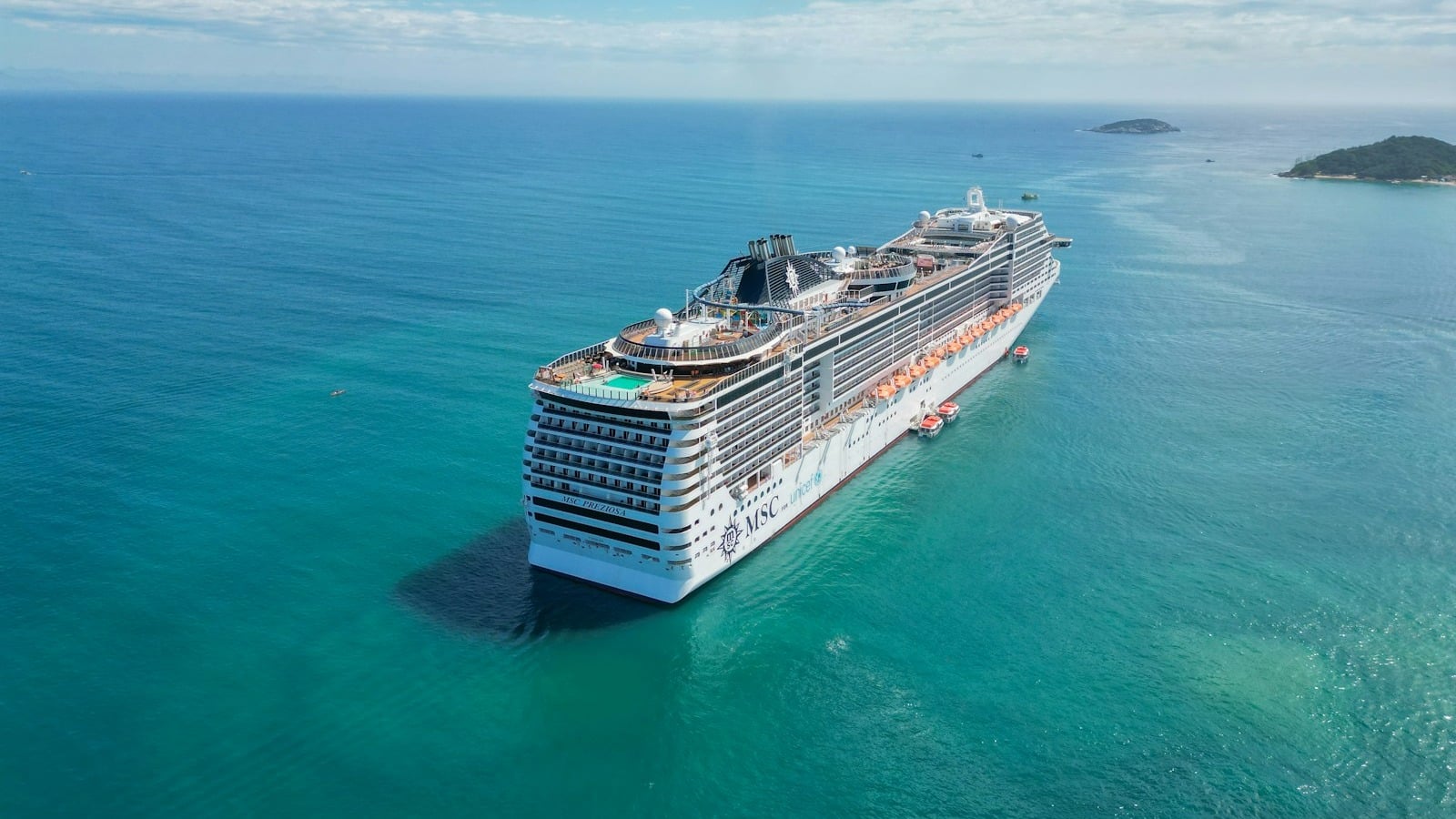
Cruising has a reputation problem, and it’s mostly built out of headlines. A norovirus outbreak makes the news. A man-overboard story goes viral. Somebody films a brawl by the pool and half the internet decides the entire industry is a floating disaster waiting to happen.
Here’s what never makes the news: a ship passing a surprise health inspection for the hundredth time. Nobody clicks on “everything went fine again.” So the scary stuff gets amplified and the boring, reassuring stuff, which is most of what actually happens, stays invisible.
I’ll be straight about where we’re coming from. We’re newer cruisers, not 30-year veterans, and the more I’ve dug into how these ships actually run, the more I’ve landed on a take that sounds backwards at first: a modern cruise ship is one of the most heavily regulated, closely watched places you can spend a week. Here’s the machinery most passengers never notice.
Why Cruise Ships Get a Bad Safety Rap
The problem starts with the math. You put six thousand people in a confined space for a week, and anything that goes wrong gets concentrated and dramatic. A stomach bug that would be a quiet Tuesday in any city becomes “outbreak on the high seas.” A single rare tragedy becomes a referendum on whether anyone should ever cruise again.
The media has every reason to lean into that. Fear travels further than reassurance, and “cruise ship operates normally” has never once been a headline.
But concentration cuts both ways. The same density that makes a problem look dramatic is exactly why the oversight is so intense. Nobody inspects your hotel hallway twice a year and posts the score online. They do that to cruise ships. We touched on how skewed the coverage can get in our look at the realities behind some recent cruise safety stories, and the gap between perception and process is huge.
The CDC Inspections Most Passengers Never See
Start with the part almost nobody books a cruise thinking about. Any ship that carries 13 or more passengers, sails an international itinerary, and calls on a U.S. port falls under the CDC’s Vessel Sanitation Program. That means twice-a-year surprise inspections, no advance warning, by federal public health officers.
These aren’t a quick walk-through. Inspectors spend hours combing through galleys, water systems, pool and spa chemistry, food storage temperatures, child activity centers, and crew illness-reporting procedures. Ships are scored out of 100, and the bar to pass is 86. Score below that and you fail, publicly, with a detailed report of what went wrong posted on the CDC’s website for anyone to read.

Photo by Vladislav Igumnov on Unsplash
That public part matters. You can look up your exact ship’s inspection history before you sail, which is more than you can say for most restaurants you’ll eat at this year.
Heads up: The CDC publishes every ship’s score online for free. If you’re nervous about a specific ship, search its name on the Vessel Sanitation Program site before you book. A score in the mid-90s is normal and healthy.
Here’s the part that surprised me most. In 2025 the program went through staffing cuts, and a wave of headlines announced that cruise inspections had been “gutted.” The actual data went the other direction. The CDC inspected 273 ships in 2025, up roughly 39% from the year before, and the early 2026 numbers kept that pace with average scores sitting north of 96. The program kept running because it’s staffed mainly by U.S. Public Health Service officers and funded by the cruise lines themselves, so federal budget swings don’t shut it down.
So a story that read like “cruising just got more dangerous” was, underneath, a record year for inspections. When a ship does slip, it’s notable precisely because it’s rare, which is why a single failure like the Norwegian Dawn’s missed inspection became a story at all.
Cruise Ship vs. Your Last Hotel: The Oversight Gap
It’s worth putting the cruise system next to the land-based vacations people consider “safe” by default. Restaurants get inspected too, sure, usually by a local health department on a schedule that varies wildly by city. Hotels mostly don’t get health-inspected at all. Almost none of it gets reported to the public the way a cruise ship’s record does.
Here’s a rough side-by-side of how the oversight actually compares.
| What’s watched | Cruise ship | Typical hotel or resort |
|---|---|---|
| Unannounced health inspections | Twice a year, federal officers | Varies by local rules, often rarely |
| Inspection scores posted publicly | Yes, free to look up | Sometimes, depends on the city |
| Mandatory outbreak reporting | Required before arriving in port | Generally not required |
| On-site medical staff | Doctor and nurses, around the clock | Usually none; you call 911 |
| Dedicated 24/7 security team | Yes, controlled access | Front desk, limited coverage |
None of this means a hotel is dangerous. The point is narrower than that: the cruise ship is watched more closely, more often, and more publicly than almost any land vacation you’ll book. That’s the opposite of how most people picture it.
“Washy Washy” Isn’t Just a Catchy Song
If you’ve cruised, you know the drill. A crew member parked at the buffet entrance, spritzing sanitizer into your hands, often singing some version of “washy washy, happy happy.” It’s easy to write off as a gimmick. It isn’t.
Norovirus, the bug behind most cruise stomach stories, spreads person to person and surface to person. The entire defense is hand hygiene and relentless cleaning. So the crew sanitizes handrails, elevator buttons, buffet tongs, and tabletops all day long, and they put a friendly human at the buffet door to make sure your hands are clean before you touch the serving spoons.

Photo by Towfiqu barbhuiya on Unsplash
On our first sailing I’ll admit I found the buffet sanitizer routine a little much by day three. Then I read how much of the outbreak risk traces straight back to hand contamination and changed my mind. It’s not theater. It’s the cheapest, most effective tool they’ve got. Cruisers feel strongly about it too. When we asked whether handwashing should be mandatory before the buffet, almost nobody said no.
What we learned: The washy-washy crew aren’t being annoying. They’re the front line against the one illness most likely to ruin a cruise, and they work. Just play along.
How Cruise Lines Actually Handle Storms
People picture a captain squinting at dark clouds and deciding whether to risk it. That’s not how it works. Cruise lines run dedicated marine operations and meteorology teams who track storms, swell, and ocean conditions around the clock, often from shoreside command centers watching the whole fleet at once.
Ships reroute constantly. A hurricane forms in the Caribbean and itineraries get reshuffled days in advance, swapping ports, changing the order of stops, or steering wide around the weather entirely. It can be a letdown when your dream port gets cut, and I get why that stings.
But a swapped port is the system working, not failing. A ship that can move 20-plus knots in any direction has a massive advantage over a beach resort that’s bolted to the coastline when a storm rolls in. The ship simply goes somewhere else.
Security Is Tighter Than You’d Guess
Getting onto a cruise ship is closer to boarding a flight than checking into a hotel. Your bags go through screening, your photo gets tied to your keycard, and that card is scanned every single time you step on or off the ship. There’s no wandering aboard unaccounted for.
Behind that, ships operate under an international maritime security code with real teeth. Modern vessels carry extensive camera coverage across public areas, dedicated onboard security teams working in shifts, and tightly controlled access to crew-only and restricted zones. Crew themselves are vetted and trained before they ever sail.
It’s not a perfect bubble, and no one should pretend otherwise. But the idea that a cruise ship is some lawless free-for-all doesn’t survive contact with how access is actually managed. The lines also enforce passenger behavior rules harder than most people expect, as anyone who’s read up on the things that can genuinely get you removed from a sailing already knows.
The Drills and Medical Care You Don’t Think About
Before the ship leaves port, every passenger has to complete a muster drill. Most lines now run it as an “eMuster,” where you watch a short safety video on your phone or cabin TV, then check in briefly at your assigned station. It feels minor. It means that within hours of boarding, several thousand strangers all know where to go in an emergency.
Crew training goes much deeper. They run regular emergency and evacuation drills, and a meaningful share of the staff you see pouring coffee or making towel animals have real safety roles if something goes wrong. We cover what that first day actually looks like in our guide to cruise embarkation day, drill and all.

Photo by Diego F. Parra on Pexels
Then there’s the part people forget exists: a real medical center. Cruise ships carry a doctor and nursing staff, plus a facility set up to stabilize emergencies, treat the everyday stuff, and coordinate a medical evacuation if a case is serious enough to need a hospital ashore. It’s not a full hospital, and it isn’t free. But “trained medical staff on call all night” is more than your hotel offers.
So, Are Cruises Actually Safe?
Let me be honest, because hedging here would be a cop-out. Nothing in travel is 100% safe. People do fall overboard, accidents happen, and every one of those stories is a real tragedy for a real family. I’m not going to wave that away.
But the rare, awful event is exactly that, rare, and it’s the part the headlines fixate on. The day-to-day reality is a floating small city running on strict procedure: public health inspections, mandatory illness reporting, constant sanitation, around-the-clock weather and navigation monitoring, controlled access, trained crew, and onboard medical care. Most land vacations have a fraction of that watching over you.
My honest take, as someone still relatively new to all this? I feel safer on a cruise ship than I do in a lot of crowded hotels, resorts, and malls. The difference is that on the ship, somebody is being paid to watch, inspect, clean, and report, and a lot of that watching is public record.
The Bottom Line
Cruising isn’t dangerous. It’s misunderstood. The fear gets built from a handful of dramatic headlines, while the genuinely impressive part, the layers of inspection, sanitation, security, and emergency planning, runs quietly in the background where no one thinks to look.
Is it risk-free? No vacation is. But measured against how most people actually travel, a cruise ship holds up as one of the safer ways to spend a week. The next time someone tells you cruises are unsafe, ask them when their last hotel posted its health inspection score online.
Have you ever felt safer or less safe on a ship than you expected? I’d love to hear what changed your mind, either way.