

Two things scare first-time cruisers more than anything else.
Getting seasick, and catching whatever stomach bug they saw in a headline.
Both are worth understanding. Neither is as likely as you’d think on a modern ship.
The stuff that actually ruins a cruise day is quieter. It’s the dehydration that sneaks up after a sunny sea day and a few cocktails. The sunburn you got on day one. The night you stayed up too late and woke up feeling like you were catching a cold.
We started cruising in 2025, so we’re still newer at this than most of the blogs you’ll read. But staying healthy onboard isn’t really about experience. It’s about a handful of small habits nobody tells you to pack.
Here’s what actually works.
Will You Actually Get Seasick?
Most people on a big modern cruise ship never feel seasick at all.
That surprises first-timers, because the fear is so common. Today’s large ships sit low and wide in the water and run stabilizers that cut down the roll you’d feel on a smaller boat.
On a calm Caribbean week, plenty of cruisers forget they’re even moving.
Motion sickness gets more likely in a few specific situations. Rougher water like the open Atlantic. Smaller, older ships. And the simple fact that some people are just more prone to it than others.

Most times you don’t even feel the boat moving and forget you’re out at sea
If you get carsick or queasy on planes, assume you’re in that group and plan ahead.
What it feels like usually starts subtle. A little off, a bit sweaty, maybe a headache before any real nausea. Catching it early is most of the battle.
Heads up: The smaller, older ships in a fleet move more than the big ones. Our first cruise was a 5-night run out of Baltimore on one of Royal Caribbean’s smaller Vision-class ships, and we felt more gentle motion than we expected for a calm sailing. Nothing rough, just noticeable. If you’re motion-sensitive, ship size matters.
How to Stop Seasickness Before It Starts
The single biggest lever is your cabin.
A cabin in the middle of the ship on a lower deck feels the least motion. The higher up and the farther forward or aft you go, the more the ship moves under you.
If you’re worried about seasickness, book midship and low. It’s free insurance.
The old horizon trick is real, too. When you start to feel off, get outside and look at the horizon, or step onto a balcony or a top deck. Your eyes and inner ear stop arguing with each other.
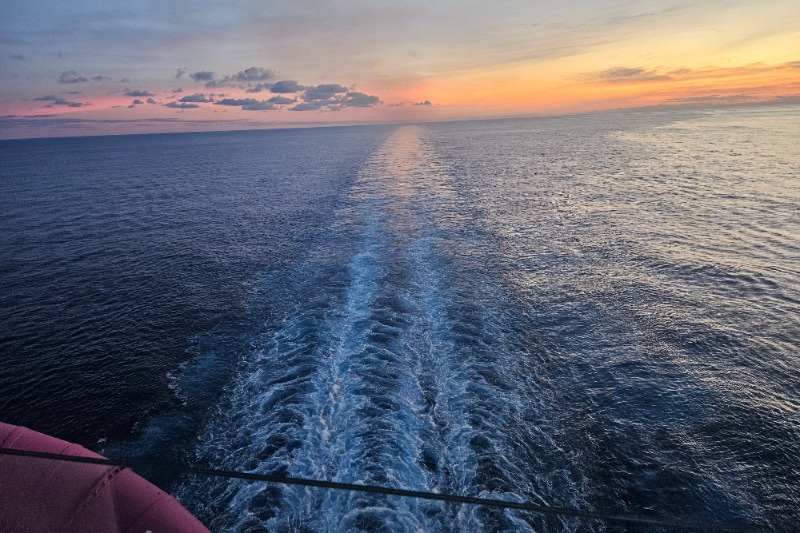
Looking out on the horizon on the deck can help sometimes with sea sickness
Fresh air helps more than lying in a dark interior cabin, which is the instinct most people have and the wrong one.
Then there are the remedies. Here’s how the common options stack up.
| Remedy | How it works | Good to know |
|---|---|---|
| Meclizine (Bonine, Antivert) | Once-daily OTC pill | Less drowsy than Dramamine for most people |
| Dimenhydrinate (Dramamine) | OTC pill | Works well but tends to make you sleepy |
| Scopolamine patch | Prescription patch behind the ear, lasts about 3 days | Ask your doctor before the cruise; the strongest option |
| Ginger (chews, capsules, tea) | Natural anti-nausea | Mild, no drowsiness, easy to combine with the others |
| Acupressure bands (Sea-Bands) | Wristband on a pressure point | Drug-free, no side effects, works for some people |
The rule that matters most: take it before you feel sick, not after.
Most of these work by preventing nausea, not curing it once it has hit. Wait until you’re green and you’ve missed the window.
I’d pack a few ginger chews and a box of Bonine even if you don’t expect to need them. They weigh nothing. Being the person with the fix beats being the person who needs one.
One more free tip: most cruise lines keep green apples and ginger at guest services or the buffet, both old sailor remedies for a queasy stomach. Grab some if the water picks up.
Who Should Take Extra Care
For most healthy adults, staying well on a cruise is easy. A few groups should plan a little harder.
Older travelers and anyone managing a chronic condition should talk to their doctor before sailing, especially about seasickness meds that might interact with a prescription. We get into what else matters most for cruising in your 50s and beyond in a separate guide.
Pregnant travelers should check with a doctor too, since some motion-sickness medications aren’t recommended.
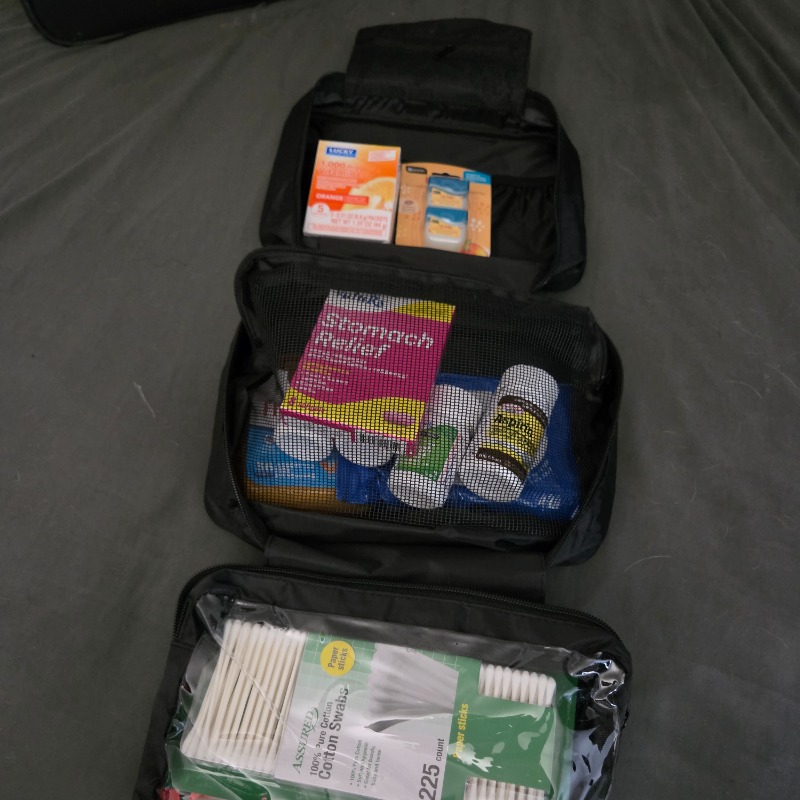
We usually bring our own over the counter medicine, but the ship usually provides them at a cost
Whoever you are, bring more of your regular medication than the exact number of days you’ll be gone. A ship pharmacy is not where you want to solve a missing-prescription problem.
The Norovirus Question
Norovirus is the one that makes headlines, and cruise ships get blamed for it more than they deserve.
Here’s the honest context. Norovirus spreads fastest anywhere large groups share food, bathrooms, and handrails in a closed space. That describes a cruise ship. It also describes a school, a nursing home, and a daycare.
Ships report outbreaks because they’re required to. Your kid’s school isn’t.
The reassuring part is that you can actually check how clean your ship runs. The CDC inspects cruise ships that call at US ports twice a year through its Vessel Sanitation Program, and every score is published.
Ships are graded out of 100. Anything 86 or higher passes, and most ships score in the 90s.
You can look up any ship by name on the CDC’s site and read its most recent report before you sail. It’s one of the most useful pre-cruise checks almost nobody does. When one ship slipped just below that passing line recently, it made news precisely because it’s rare.
Tip: Search your exact ship on the CDC’s Vessel Sanitation Program inspection tool a week or two before you sail. A score in the 90s is normal and reassuring. A recent low one is worth reading the details on.
The Handwashing Habit That Actually Matters
Here’s the thing most people get wrong about avoiding norovirus.
Hand sanitizer doesn’t do much against it.
The CDC is blunt on this: soap and water is more effective than sanitizer at removing norovirus, and sanitizer alone doesn’t work well against the virus. The alcohol just doesn’t kill it.
So the little sanitizer stations at every venue are fine, but they aren’t your real protection.
Actual soap, actual water, and actual scrubbing before you eat is. Especially before the buffet, where hundreds of hands touch the same serving spoons all day.
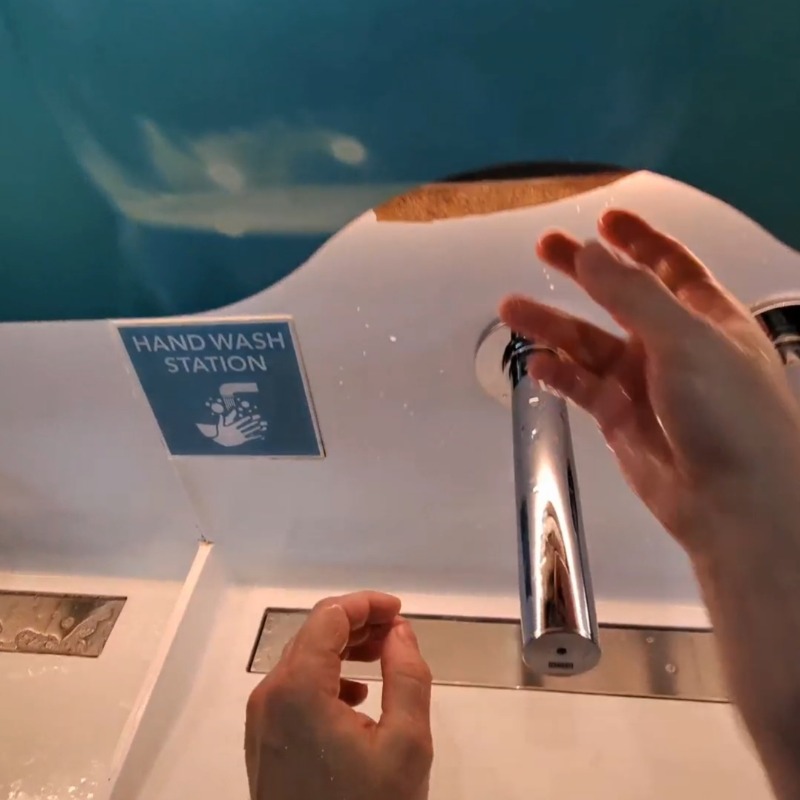
Washing your hands before entering the cruise buffet is highly recommended
We’re not the only ones who feel strongly about this. When we asked our readers whether handwashing should be mandatory before the buffet, almost nobody disagreed.
A couple of small habits go a long way. Use the serving tongs, never your fingers. Wash before every meal, not just after the bathroom.
And on day one, wipe down the high-touch stuff in your cabin: the TV remote, door handles, light switches, the phone. A few disinfecting wipes in your bag handle it.
What we learned: On our Royal Caribbean sailings, the crew stood at the buffet entrance handing out hand sanitizer and cheerfully chanting “washy washy” to get everyone to use it. It’s a little silly and completely earnest. Play along, then actually wash with soap before you load a plate.
The Sneaky Dehydration Trap
Dehydration is the health issue most cruisers never see coming.
You’re in the sun, in salt air, walking more than usual, and often drinking more than usual. All four dry you out.
The alcohol part is the sneaky one. A few drinks by the pool on a hot sea day adds up fast, and a lot of what people call seasickness or a “cruise headache” is really just dehydration wearing a costume.

Having drinks by the pool is fine but remember to drink plenty of water
Water is free on every ship, at the buffet and in the dining room. Use it.
I try to drink a full glass of water between alcoholic drinks and refill a bottle every morning. It’s boring advice, and it works better than anything in the gift shop.
If you’re weighing a drink package for your trip, that’s a separate math problem. We ran the numbers on whether a cruise drink package is worth buying in its own guide. Either way, water between rounds is the habit that keeps day two from hurting.
Sleep and Pacing Yourself
Cruises are strangely exhausting for something so relaxing.
There’s always one more show, one more late dinner, one more nightcap. Then you’re up at 6am for a port. Do that three days straight and your body starts to fold.
Being run down is how the “cruise cold” gets you. It’s usually not some exotic ship germ. It’s a normal virus finding you at your most tired.
So pace it. You don’t have to do every activity, and you don’t have to eat every meal like it’s a competition.
Pick the couple of things each day you actually care about, and let the rest go.
Tip: On a port-heavy itinerary, plan at least one slow morning. Sleeping in on a sea day is not wasting the cruise. It’s the thing that lets you enjoy the rest of it.
Sun, Pools, and Hot Tubs
Sunburn hits harder at sea than people expect.
You’re near the water, often near the equator, with a breeze that hides how much sun you’re actually getting. People who never burn at home come back from day one looking like a lobster.
Sunscreen goes on in the morning and gets reapplied after the pool, before you’re outside again. Not after you’re already pink.
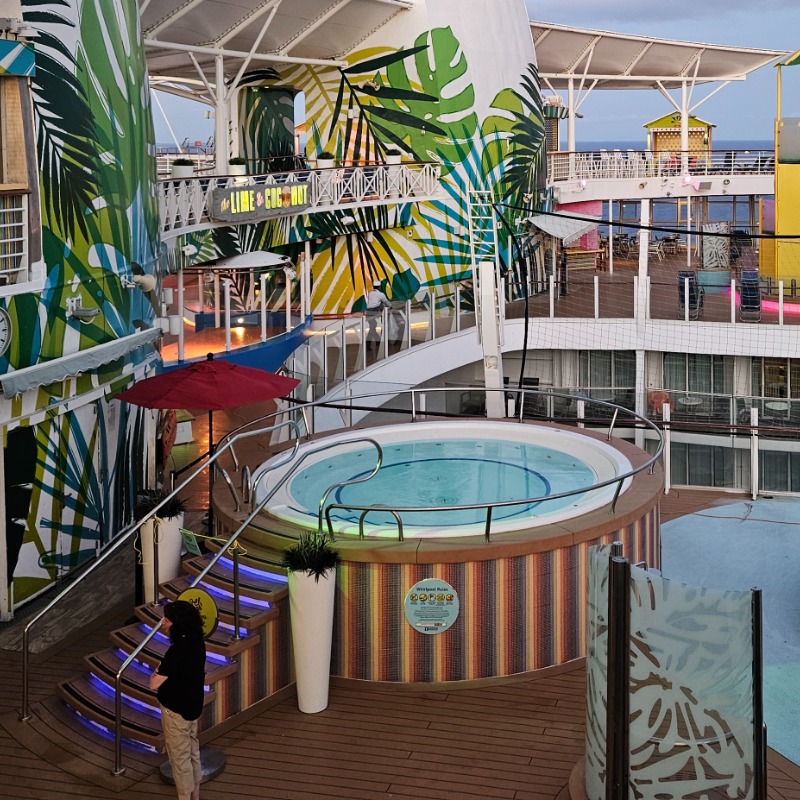
Hot tubs are fun on a cruise but make sure to wear sunscreen
The pools and hot tubs are their own small hygiene story. Cruise hot tubs are warm, crowded, and shared by a lot of people, which is exactly the environment germs like.
We looked at whether kids should even be in cruise hot tubs, and the answer surprised us. For everyone else: rinse off after, and skip the hot tub entirely if you have any open cut or scrape.
What Happens If You Do Get Sick Onboard
Every big cruise ship has a medical center with real doctors and nurses.
It’s genuinely reassuring that it’s there. What surprises people is the bill.
A basic visit often starts around $100 to $200 as of 2026, and after-hours or in-cabin visits climb higher before any tests or medication. It all posts straight to your onboard account.
The bigger surprise is coverage. Your regular US health insurance, including Medicare, usually doesn’t cover care at sea. The ship’s medical center is out of network, and you pay upfront.
A medical evacuation off the ship is the real financial nightmare, and those can run tens of thousands of dollars.
That’s the single best argument for travel insurance with strong medical and evacuation coverage. We walked through how we’d actually decide on cruise insurance separately, and the medical piece is what makes it worth it.
One last thing. If you feel a stomach bug coming on, go to the medical center early rather than hiding it. Ships take norovirus seriously and may ask you to rest in your cabin for a bit, but catching it early protects you and everyone else onboard.
Your Day-One Health Setup
Most of staying healthy comes down to what you set up in the first hour onboard.

Worse case scenario you buy medicine for a cost on the cruise
Here’s the short version, the stuff I’d actually put in a carry-on:
- A motion remedy of choice (ginger chews plus a box of meclizine covers most people)
- Prescription meds in the carry-on, with a few extra days’ worth
- A refillable water bottle
- Sunscreen you’ll genuinely reapply
- A small pack of disinfecting wipes for the cabin
Do a quick cabin wipe-down, fill the water bottle, note where the medical center is, and you’re set.
None of this is dramatic. That’s the point. Staying healthy on a cruise is a stack of small, boring habits, and they’re what let you stop thinking about it and just enjoy the trip.
The Short Version
You probably won’t get seasick on a big modern ship, but book a midship lower cabin and pack a remedy if you’re prone to it. Norovirus is real but avoidable, and soap and water beats hand sanitizer every single time. Drink water between cocktails, sleep more than you think you need, wear sunscreen from day one, and remember the ship’s doctor exists but isn’t cheap.
Do those things and the healthiest version of your cruise mostly takes care of itself.
What’s the one thing you wish you’d known about staying healthy on your first cruise?