
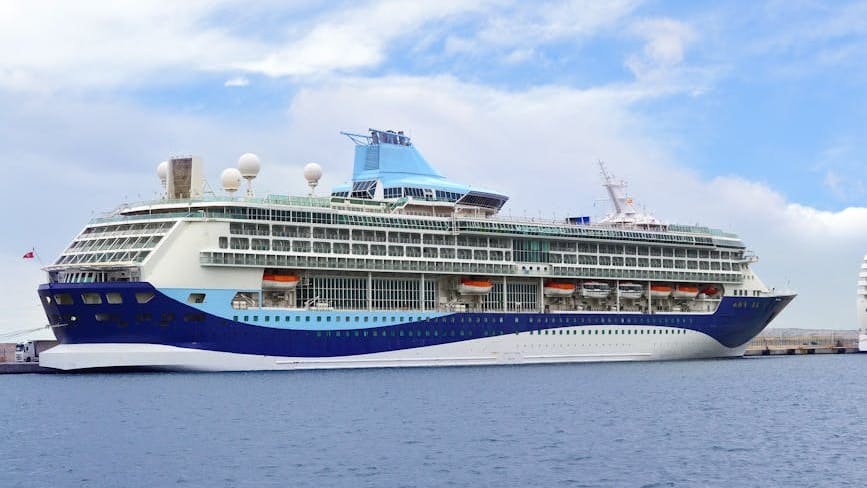
The cruise industry may be seeing its first meaningful step toward recovery in the Persian Gulf after a ship successfully passed through the Strait of Hormuz following weeks of disruption tied to regional conflict.
According to the report, Celestyal Discovery, a Malta-flagged vessel operated by Celestyal Cruises, departed Dubai on April 17, 2026 and became the first cruise ship to make the passage since the waterway was effectively shut down earlier this year. The transit is notable because the Strait of Hormuz is one of the world’s most strategically important shipping routes, and its closure had left cruise operations in the region severely disrupted.
A Key Voyage After Weeks of Delays
Vessel tracking data cited in the original report indicated that the ship left Port Rashid in Dubai at about 11:36 a.m. local time and headed toward Muscat, Oman, where it was expected to arrive the following day. The sailing was reportedly carried out without passengers, suggesting that the movement was intended primarily as an operational repositioning rather than a standard guest cruise.

Photo by Oleksiy Konstantinidi,🌻🇺🇦🌻 on Pexels
That detail matters because the ship had been unable to move for 47 days, remaining docked while instability in the region kept commercial maritime traffic largely frozen. In that sense, the voyage was less about tourism and more about testing whether cruise ships could begin safely moving through the corridor again.
Why the Passage Matters
The reported transit came shortly after indications that the Strait of Hormuz had reopened to commercial traffic under the terms of a ceasefire arrangement. The route had faced major disruption since late February, when escalating tensions involving Iran, the United States, and Israel created serious security concerns for vessels operating in the area.
At the height of the disruption, thousands of ships were reportedly stranded across the Persian Gulf region. For the cruise sector, that meant canceled sailings, interrupted itineraries, and delayed repositioning plans at a critical point in the seasonal calendar.
Cruise Lines Were Caught in the Disruption
The article noted that Celestyal was not the only operator affected. Before the shutdown, Celestyal Discovery had been sailing Arabian Gulf itineraries that included ports such as Dubai, Abu Dhabi, Doha, and Khasab. Its sister ship, Celestyal Journey, reportedly remained in Doha awaiting clearance.
Other cruise lines also felt the impact. Ships from MSC Cruises and TUI Cruises were among those affected, with vessels delayed in regional ports and some sailings reportedly canceled as lines adjusted their deployment plans. Because cruise schedules rely heavily on timing and seasonal positioning, even a relatively short closure can create wider operational problems across multiple itineraries.

Photo by Diego F. Parra on Pexels
What Could Happen Next
The successful transit of Celestyal Discovery is likely to be watched closely by cruise operators and maritime observers alike. If conditions remain stable and security protocols hold, additional ships could begin leaving the Gulf in the coming days.
That would be especially important for vessels needing to reposition toward Europe for the summer cruise season. Even so, the situation remains fluid. Any broader return to normal service will depend on continued security assurances and confidence that the waterway can remain open without renewed interruption.
Final Takeaway
Although the voyage did not carry passengers, it may prove to be an important turning point for cruise operations in the region. The ship’s passage through the Strait of Hormuz suggests that movement is beginning again after weeks of shutdown, offering a possible path toward restoring disrupted cruise schedules.
For the cruise industry, the transit stands as an early but significant sign that one of the region’s most important maritime routes may finally be reopening. Whether that leads to a broader recovery will depend on how stable conditions remain in the days ahead.