
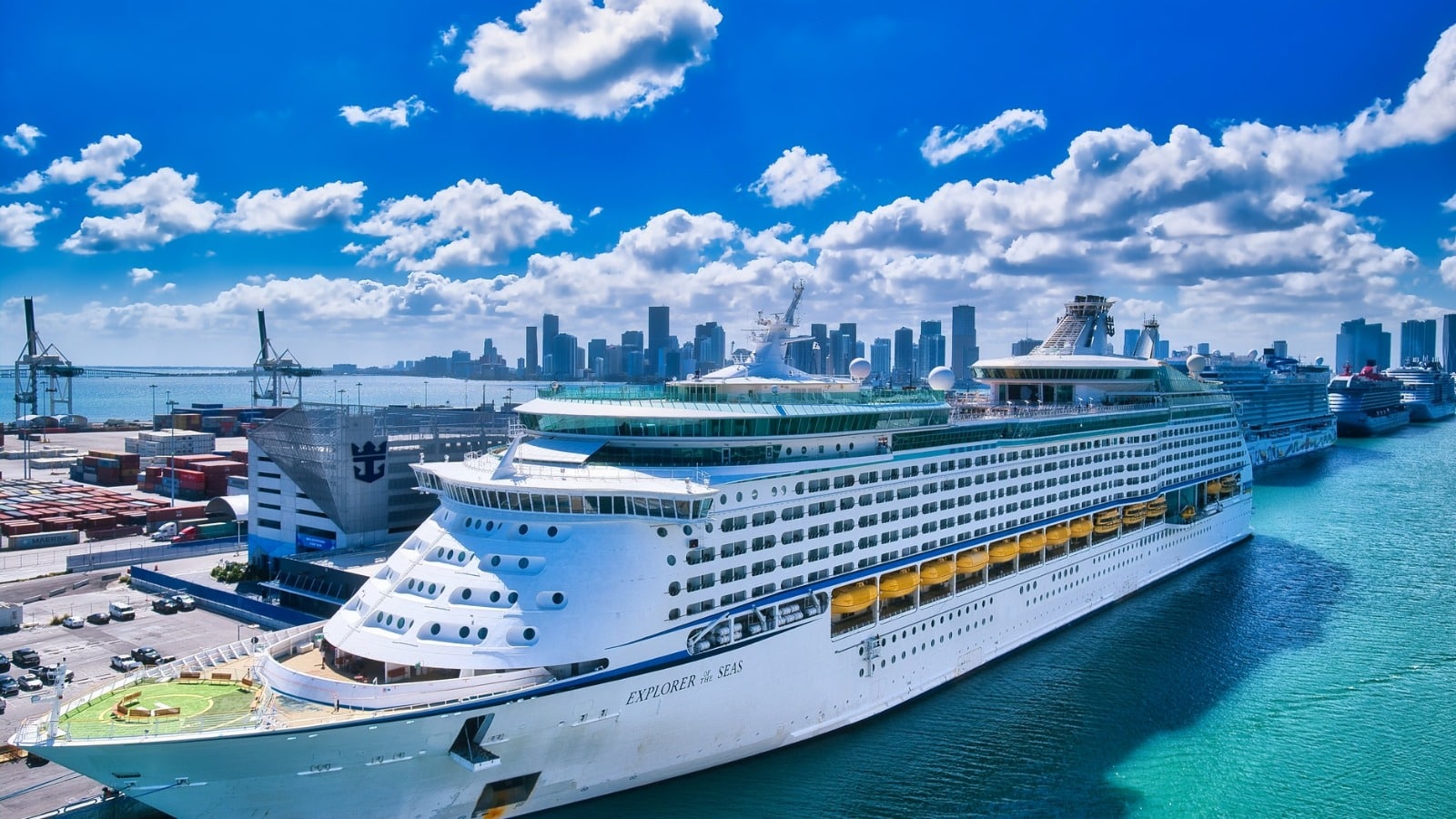
PortMiami is the busiest cruise port on the planet. It moves more passengers in a single year than some countries see in tourists. And yet, somehow, there’s still no train from the airport to the ship.
That might finally be changing. Miami-Dade County is studying a direct, non-stop train link between Miami International Airport (MIA) and PortMiami, and two specific options are now on the table.
The Two Proposals On The Table
The plan sits inside the Miami-Dade Transportation Planning Organization’s 2050 Long Range Transportation Plan, a 25-year blueprint for how the county handles its growing transportation problem. Eight options were initially studied. Two made the cut.
The first is a 9-mile extension of the existing MetroMover, the free people-mover that already loops around downtown Miami. It’s the easier of the two on paper because it could potentially reuse parts of the existing Miami River Bridge infrastructure. The catch: MetroMover cars are small, holding only about 50 people each, and they crawl at an average speed of around 9 mph.

Photo by David Brown on Pexels
The second option is a 10-mile extension of Metrorail, the city’s heavier rapid-transit system. This is the more ambitious build. It would require a brand-new bridge over the Intracoastal Waterway, which is a major engineering job. But it would deliver something the MetroMover can’t: a true “one-seat ride” with the capacity to actually move thousands of cruise passengers on a busy embarkation morning.
| Option | Distance | Capacity | Avg Speed | New Bridge? |
|---|---|---|---|---|
| MetroMover extension | 9 miles | ~50 per car | ~9 mph | Could reuse existing |
| Metrorail extension | 10 miles | Much higher | Faster | New bridge required |
If you’re picking the option that actually solves the problem, the one that gets you and your luggage from a 7am flight arrival to a 1pm boarding window without anxiety, the Metrorail version is the obvious choice. The MetroMover plan is cheaper, but it’s hard to imagine 6,000 Icon of the Seas passengers comfortably riding 50-person cars at 9 mph.
Why Miami Is Looking At This Now
The numbers force the conversation. According to Miami-Dade County, PortMiami welcomed 8,564,225 cruise passengers in fiscal year 2025, a 4% jump over the year before and the highest annual count in the port’s history, per Cruise Mummy. The MDTPO’s projections suggest that figure could reach 24.1 million by 2050.
You can’t move 24 million people through one island port using rideshares and shuttle buses alone. The math doesn’t work.
PortMiami sits on Dodge Island, connected to the mainland by a single causeway. On a busy Saturday with ten or more ships turning over passengers at the same time, that causeway becomes the bottleneck. There are reports of cruisers abandoning rideshares mid-traffic and walking the last stretch with their luggage.
Heads up: If you’re flying into MIA on cruise day right now, the standard rideshare bill runs $29 to $50 once surge pricing kicks in, according to Cruise Critic. The real cost isn’t the dollars. It’s the hour you might lose stuck in traffic between the rental car return and the gangway.
The Cost And The Timeline Reality
The price tag on either option lands in the same range: roughly $600 million to $800 million to build, plus $9 million to $15 million a year to operate. That’s the kind of money that requires federal partnership, state buy-in, and likely a multi-year fight over funding sources.
And the project is still very much on paper. Miami-Dade County Public Works is reviewing the recommendations. No alignment has been chosen. No funding has been committed. No groundbreaking date exists.
The realistic completion target, according to multiple reports, is 2050. That isn’t a cruise headline timeline. That’s a quarter-century infrastructure timeline.
If we had to bet, we’d guess this happens eventually. Miami can’t keep growing its cruise volume on a single causeway forever. But “eventually” is doing heavy lifting in that sentence. Anyone planning a cruise in the next 10 to 15 years should assume rideshares, taxis, and shuttle buses are still the way you’re getting to your ship.
Read more: We’ve covered the hidden costs on cruises that catch first-timers off guard, and airport-to-port transportation is one of the biggest line items most people don’t budget for.
What This Means If You’re Cruising Out Of Miami
The honest answer for the next decade-plus: not much changes day-to-day.
For now, your options getting from MIA to PortMiami are:
- Rideshare (Uber/Lyft) — the most common choice, $29 to $50 depending on surge
- Taxi — flat-rate fares, generally similar pricing
- Cruise line shuttle bus — usually pre-booked through your cruise line, often the most predictable option on busy embarkation days
- Rental car or private shuttle — viable but adds parking complexity
- Public transit with transfers — technically possible (Metrorail to downtown, then taxi), but you’ll juggle luggage at every transfer
We haven’t personally cruised out of PortMiami, so we’re working off what cruisers consistently report rather than first-hand experience. The advice in online communities is pretty uniform: don’t fly in the morning of, don’t underestimate Miami traffic on a busy embarkation day, and don’t assume an Uber will save you 20 minutes when there are nine ships in port. We dig into more pre-cruise planning gotchas in our 2026 Caribbean cruise guide.

Photo by Ferdinand F Eman on Pexels
If a direct train ever does open, it would make PortMiami the first major U.S. cruise port with a true rapid-transit connection to a major airport, according to Cruise Critic. That’s a real upgrade for the cruise experience, not just for tourists but for the thousands of port workers and cruise crew who currently have no good transit option either.
What To Watch Next
The next milestone in this story is alignment selection, the point where Miami-Dade officially picks between the MetroMover and Metrorail options or signals it’s leaning a particular way. After that comes the funding fight, which will likely involve federal grants, state contributions, and whatever Miami-Dade can put together locally.
The takeaway for cruisers right now is simple. Miami is finally taking seriously the idea that the world’s busiest cruise port shouldn’t depend on a single bridge and a fleet of rideshares to function. The plan exists. The two options are on the table. The price is known. What’s not known is who pays for it, when, and which version actually gets built.
For now? Build extra travel time into your embarkation morning, and keep an eye on this one.
Have you ever gotten stuck in PortMiami traffic on cruise day? What’s your strategy for getting from MIA to the ship?

I think a large bus terminal with busses to each cruise terminal would be easier and far better.