
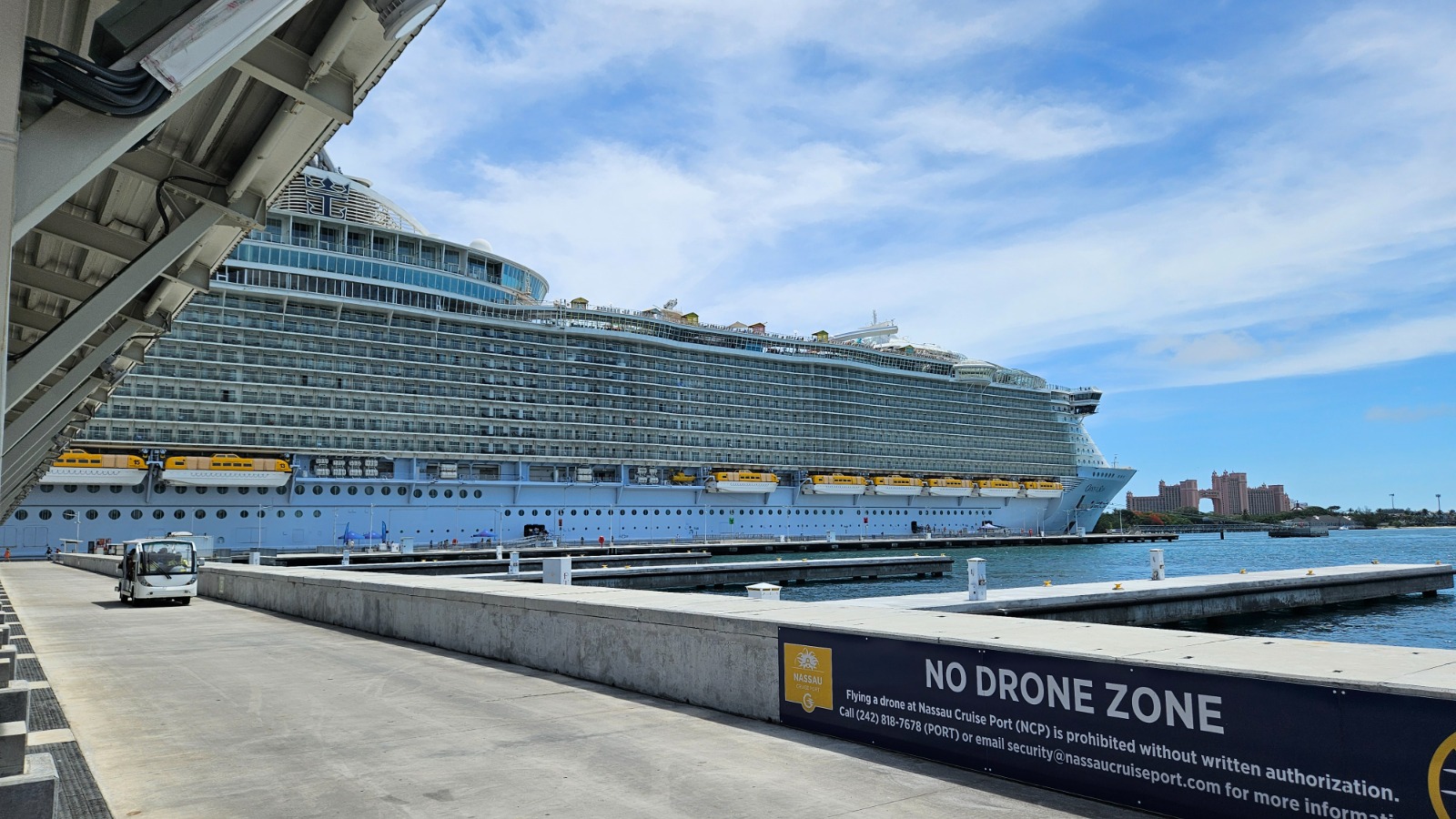
Modern cruise ships are basically cashless.
Your room key doubles as your credit card. Everything you buy onboard gets charged to your account and settled at the end of the sailing.
So plenty of first-timers show up with no cash at all.
Then they reach the pier, a porter grabs their bags, and there’s an awkward beat where nobody has a single dollar to hand over.
Cash still matters on a cruise. Just not where you’d expect, and not in the amounts most articles throw around.
Here’s how much I’d actually bring, exactly where it gets used, and where you should keep your wallet shut and let your account do the work.
Do You Even Need Cash on a Cruise Anymore?
Short answer: yes, but a lot less than you think.
Onboard, you almost never need it. The whole ship runs on your cruise card or wristband, and cash isn’t accepted at most bars, shops, or restaurants anyway.

Cash comes back into play at the edges of the trip. The terminal on embarkation day. The crew who go above and beyond. The ports, especially taxi drivers and small vendors.
That’s the mental model that makes this easy. The ship is cashless. The stuff around the ship isn’t.
Get that one distinction right and the “how much cash” question mostly answers itself.
Where Cash Actually Matters
Let’s get specific about where those dollars leave your hand.
Porters at the terminal. When you drop your bags curbside before check-in, the porters loading them aren’t cruise line staff, and a dollar or two per bag is customary. This is the number one “oh no, I have no cash” moment for new cruisers.
Extra tips for standout crew. Your daily gratuities are already handled on your account, so anything extra is on top, not instead. A few dollars to a cabin steward who learns your name or a bartender who remembers your order is almost always cash.

Vintage lounge is one of the best on Royal Caribbean. We tip bartenders all the time because they go above and beyond
Tender ports. Some ports can’t dock the ship, so you ride a small boat, called a tender, to shore. A little cash is handy for what you find when you land.
Taxis and local transport. Plenty of port taxis and shuttle drivers take cash only, or strongly prefer it. This is where I’ve seen people get stuck the most.
Small vendors and beach stalls. Chair rentals, a guy selling coconuts, a table of souvenirs. Card readers are hit or miss, and small cash keeps things moving.
None of it is huge. All of it is smoother with a few small bills in your pocket.
Heads up: The curbside porters are the tip almost every first-timer forgets. On our first cruise out of Baltimore, we made sure we had singles ready before we even parked. It’s a small thing that starts the trip off right, and we cover the rest of the routine in our walkthrough of embarkation day.
The Onboard Exception Nobody Warns You About
There’s one spot on the ship where cash still rules: the self-service laundry.
Many ships have coin-operated washers and dryers, and the change machines aren’t always working or well-stocked.
If you’re on a longer sailing and plan to do laundry, a few dollars in quarters saves you a frustrating hunt on day five.
It’s a tiny thing, but it’s the one truly cashless-ship exception that trips people up.
How Much Cash We’d Actually Bring
Here’s where most articles either wildly overshoot or dodge the question entirely.
I’m not going to tell you to bring $500 for a week at sea. On the wrong itinerary, that’s $500 sitting in a drawer being a theft risk.
The amount that actually makes sense scales with two things: how long you’re sailing, and how many port days you have.
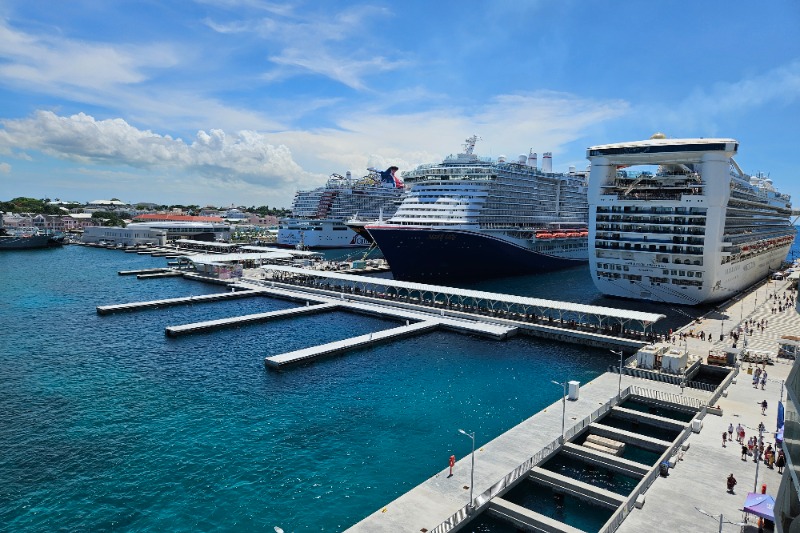
Bahamas Cruise port
More port days mean more taxis, more vendors, and more chances to spend real money on land. A sea-day-heavy sailing barely touches cash at all.
Here’s the rough framework I’d use for a couple, assuming most real spending goes on a card or your onboard account.
| Cruise Length | Sea-Day Heavy | Port-Heavy |
|---|---|---|
| 3-4 nights | $40-$60 | $60-$100 |
| 5-7 nights | $60-$100 | $100-$160 |
| 8+ nights | $100-$150 | $150-$250 |
Those numbers are deliberately modest. They cover porters, a few extra crew tips, taxi fares, and small port purchases, not big excursions or shopping hauls.
Put the big stuff on a card. Cash is for the small, in-person moments.
A Simple Way to Budget Your Cash by Category
If that table still feels loose, build it from the bottom up instead. This is how I’d sketch a week-long cruise with a few ports.
Here’s roughly where the cash goes and whether a card usually covers it instead.
| What It’s For | Rough Cash | Card Usually Works? |
|---|---|---|
| Porters at the pier | $5-$10 | No |
| Extra crew tips | $20-$40 | No |
| Port taxis and shuttles | $20-$60 | Sometimes |
| Small vendors and markets | $20-$50 | Rarely |
| Laundry quarters | $5-$10 | No |
| Emergency buffer | $20 | n/a |
Add it up and a typical week lands around $90 to $190 for two, which lines up with the framework above.
Notice what’s missing. Excursions booked through the cruise line, drinks, specialty dining, the spa, the casino: none of it needs a single dollar of cash.
The big variable is always ports. A relaxed Bahamas run with one beach day needs very little. A Southern Caribbean week with a taxi tour at every stop needs more, and a few other costs sneak in too, which we break down in our rundown of hidden cruise costs.
Do You Need Local Currency at the Ports?
For most cruises out of the US, the answer is refreshingly simple.
US dollars are widely accepted across the Bahamas and most Caribbean ports, so you generally don’t need to exchange anything before you go. If you’re still in the planning stage, our things to know before a Caribbean cruise covers the other money details first-timers ask about.
Bermuda is the easiest of all. The Bermudian dollar is pegged one-to-one with the US dollar, and US cash is accepted everywhere at par. When we were in Bermuda, we never exchanged a thing, and the same held true at the Bahamas ports on our next sailing.
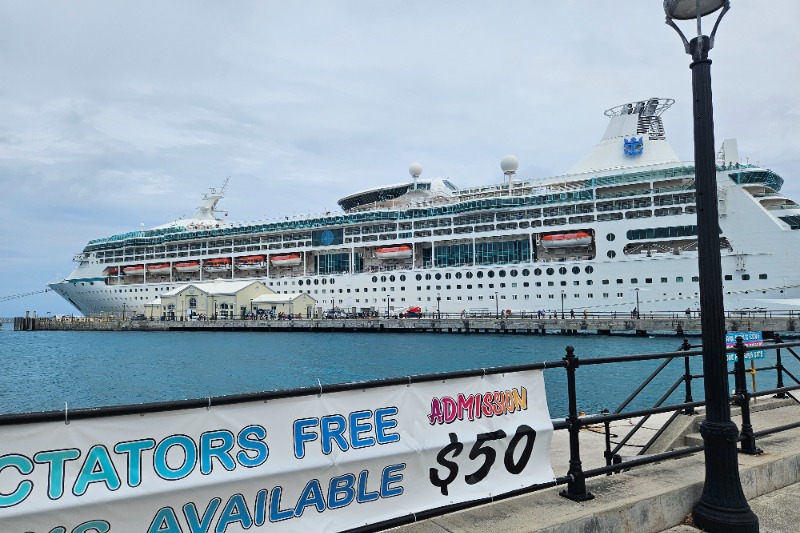
Bermuda cruise port is the most welcoming we have ever experienced. Highly recommended to visit
Mexico is similar in the cruise ports. Places like Cozumel take US dollars all day long, though you’ll sometimes get a slightly better deal paying in pesos at local spots.
You might get change back in local currency, which is fine to spend before you leave and nearly worthless once you’re home. Try to run it down on your last few purchases.
It gets more complicated farther afield. On European itineraries, a small amount of local currency for a taxi or a market stall can help, though cards still cover most of it.
What we learned: We brought a stack of small US bills for our port days and never touched a currency exchange once. For Bahamas, Caribbean, and Bermuda cruises out of the US, plain US dollars in small denominations is all you need.
How to Get Your Cruise Cash Without Overpaying
Where you get the cash matters almost as much as how much.
Pull it from your own bank before you leave home. Ask specifically for small bills, singles and fives, because that’s what you’ll actually use.
Avoid the ATMs at the port and the cash machines onboard. Both tend to charge steep fees, often several dollars per withdrawal on top of whatever your own bank adds.
Skip the airport exchange counters too. The rates there are some of the worst you’ll find anywhere.
While you’re at it, tell your bank you’re traveling so your card doesn’t get flagged the first time you swipe it at a port shop.
Tip: Break your cruise cash into ones and fives before you pack. Handing over a twenty for a four-dollar item and hoping for change is how you burn through money you meant to keep. Small bills are the whole game.
If you’d rather not carry a big wad at all, some lines let you put cash down on your onboard account at guest services instead of a credit card. It’s slower and a little old-school, but it works if you prefer to cruise without a card on file. And if you’re trying to keep overall spending down, not just your cash, our cruise money-saving tips go a lot further than penny-pinching at the pier.
What You Should Not Use Cash For
This is the flip side, and it matters just as much for your budget.
Your daily gratuities post to your onboard account automatically. You don’t pay those in cash at the end unless you specifically go to guest services and ask to, which most people shouldn’t. We walk through how that whole system works in our full guide to cruise tipping.
Drinks and drink packages go on the account, with the service charge added automatically. There’s no reason to hand a bartender cash for a drink that’s already covered. If you’re still weighing a package, we ran the drink package math separately.
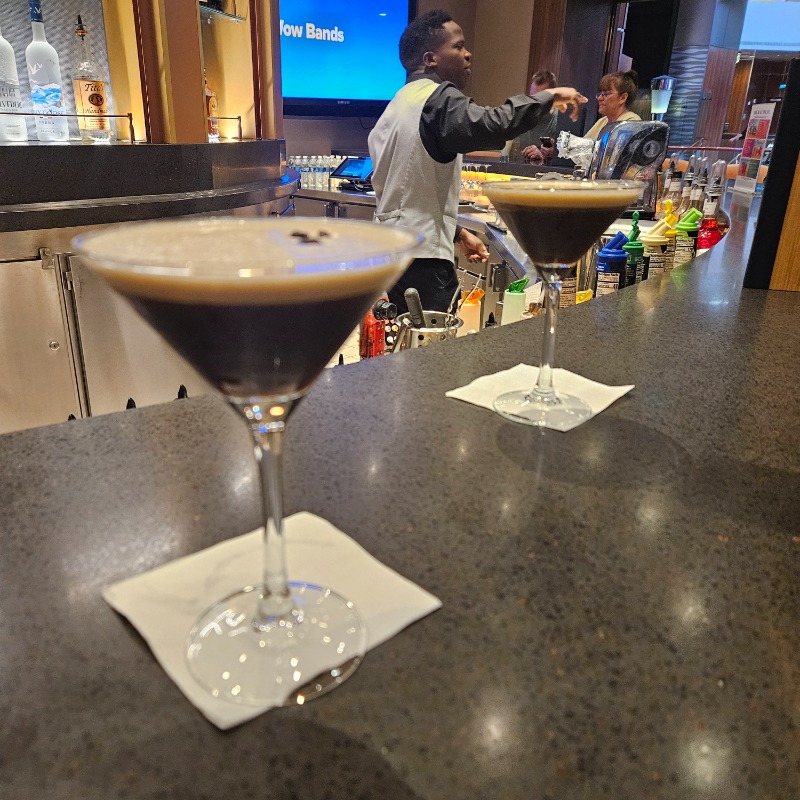
We usually get the drink package and worth it for us. We like to try different drinks
Specialty dining, the spa, the casino, and cruise-line shore excursions all bill to your account too. Even the private island most lines drop you at runs on your cruise card, exactly like the ship.
The rule of thumb: if it happens on the ship or you booked it through the cruise line, it’s on your account. Cash is for the people and places the cruise line doesn’t control.
Keeping that line clear is the fastest way to stop overpacking cash.
A Few Cash Mistakes First-Timers Make
The classic one is bringing all twenties. You’ll want change for a $5 fare or a $2 tip, and nobody at a beach stall wants to break a big bill.
The second is bringing far too much and leaving it loose in the cabin. Only carry what you’ll spend that day.
The third is forgetting cash entirely and scrambling at the pier. If you plan for nothing else, plan for the porters.
The last is assuming the ports won’t take cards at all. Most touristy shops and restaurants do. Cash is for the small stuff and the drivers, not for everything.
Keeping Your Cash Safe Onboard
A cabin doesn’t have a hotel-style front desk holding your valuables, so a little care goes a long way.
Most cabins have a small in-room safe. Use it for the cash you’re not carrying that day, along with your passport.
Take ashore only what you plan to spend, broken into small bills, and leave the rest locked up.
If you’re traveling as a couple or family, split the cash between you so a lost wallet doesn’t wipe out the whole trip.
None of this is dramatic. Cruise ships are one of the safer travel settings you’ll find. But cash is still cash, and a drawer is not a safe.
The Honest Bottom Line
For a typical Caribbean, Bahamas, or Bermuda cruise, most couples do fine with somewhere between $90 and $190 in cash, weighted heavily toward small bills.
Bring more if you’ve got a port-packed itinerary with taxi tours at every stop. Bring less if you’re mostly at sea. The ship itself is cashless, so the cash you carry is really for the pier, the ports, and the crew who earn a little extra.
Get it in ones and fives, keep the bulk in the safe, and take only what you need each day. Do that and you’ll never have that empty-pocket moment at the gangway.
How much cash do you usually bring on a cruise, and have you ever been caught short at a port?