
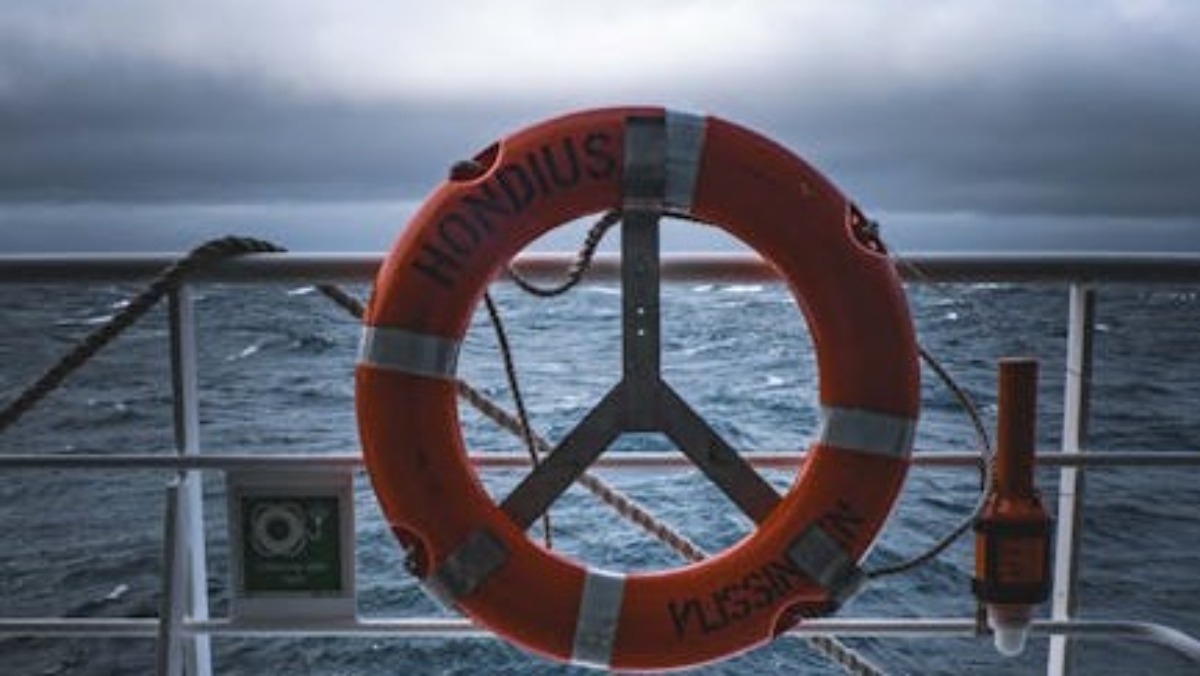
The MV Hondius is expected to anchor off the Spanish island of Tenerife on Sunday, May 10, where authorities will begin a tightly choreographed evacuation of more than 140 passengers and crew still on board the hantavirus-stricken expedition ship.
The arrival ends weeks of escalating crisis on the Dutch-flagged vessel, which left Ushuaia, Argentina on April 1 for what was sold as a five-week Antarctic nature expedition. Three passengers have died — a Dutch couple and a German woman — and six cases have been laboratory-confirmed as the Andes strain of hantavirus, the only hantavirus known to spread between people. The ship’s only physician was airlifted off in Cape Verde earlier this week and flown to Spain in critical condition.
What’s Actually Happening On The Hondius
After being refused entry by the Canary Islands’ regional government earlier in the week, the ship is now welcome under an agreement reached between Spain’s national government, Canary Islands authorities, and the World Health Organization. Canary Islands president Fernando Clavijo had initially refused to receive the ship, citing public safety concerns that drew open comparisons to the Diamond Princess COVID standoff in 2020.
The compromise: the ship will anchor offshore rather than dock at the port of Granadilla. Passengers will transfer to land via small vessel, then board cordoned-off buses for the roughly 15-minute drive to Tenerife South Airport, where they’ll move directly to repatriation flights without contact with the local population. Spain’s emergency services chief Virginia Barcones described the disembarkation site as “completely isolated” and “cordoned-off.”

Photo by Oğuz Kandemir on Pexels
WHO Director-General Tedros Adhanom Ghebreyesus is in Tenerife this weekend to coordinate the operation. The U.S. has committed a repatriation flight for the 17 American citizens still on board, who will be transported to the National Quarantine Unit at the University of Nebraska Medical Center in Omaha. The U.K. is chartering a separate flight for nearly two dozen British nationals.
There’s a hard weather deadline. Canary Islands authorities say the evacuation must be completed between Sunday morning and Monday or face delays of days, possibly weeks. Spain’s health minister has called it an “unprecedented operation.”
The Outbreak By The Numbers
Per the WHO’s May 8 situation report:
- 8 total cases linked to the ship, with 6 laboratory-confirmed as Andes hantavirus
- 3 deaths (case fatality ratio: 38%)
- Approximately 150 people on board across 23 nationalities, with British, American, and Spanish passengers the largest groups
- 30 passengers disembarked April 24 at St. Helena before the outbreak was detected, scattering across at least 12 countries
- 12 countries currently monitoring former passengers, including the U.S., U.K., Canada, Germany, Netherlands, Switzerland, Sweden, Denmark, Singapore, New Zealand, Turkey, and Saint Kitts and Nevis
- 5 U.S. states monitoring 9 or more residents (Arizona, California, Georgia, Texas, Virginia)
- Hantavirus incubation period: 1 to 8 weeks
- Berth prices on this voyage: €14,000 to €22,000 ($16,000 to $25,000)
Two new suspected cases emerged Friday: a British national still on Tristan da Cunha (where the ship stopped April 13–15) and a Spanish woman in Alicante who shared a Johannesburg flight with the Dutch widow before she died. The KLM flight attendant who briefly tended to that passenger has tested negative.
Why The Bird-Watching Detail Matters
Here’s the angle getting buried in the death-count coverage. The WHO has confirmed that some passengers may have been infected during bird-watching excursions on remote islands the ship visited, not only in Argentina before boarding.

Photo by Brad Weaver on Pexels
In its briefing this week, the WHO said: “Other cases may also have been infected while on bird-watching trips to islands where birds and rodents live. Such trips are part of the cruise.”
That’s a meaningful shift in the exposure picture. Initial reporting tied the outbreak to Argentina, with two of the three fatalities (the Dutch couple) believed to have been exposed during a bird-watching outing near a Ushuaia landfill before the cruise even started. That theory hasn’t been ruled out, and the Andes virus confirmed in the cases is endemic to South America rather than to the South Atlantic islands the ship later visited. The Argentina exposure remains the leading theory for the index cases.
But the WHO is now saying the islands the ship visited (the South Atlantic outposts that are the entire point of an Antarctic expedition) may have been part of the exposure chain too. Wherever there are seabird colonies on remote islands, there are rodents. South Georgia, Tristan da Cunha, the Falklands, Nightingale Island, Ascension. The Hondius landed at most of these between April 1 and the time the outbreak was detected.
The human-to-human transmission element, confirmed in this outbreak, combined with shared zodiac landings, communal meals, and tight cabins is what’s driven the secondary case count up.
What This Tells Cruisers About Expedition Sailings
If you’re considering an Antarctic or other expedition cruise, this outbreak isn’t a reason to cancel. Thousands of people sail expedition itineraries every year without incident, and the WHO has been clear that the public health risk from this event remains low for the general population.
But it is a reminder that expedition cruising carries a different risk profile than mainstream cruising, and the gap matters.
Mainstream ships from Royal Caribbean, Carnival, or Norwegian carry multiple physicians, sail near significant medical infrastructure, and visit ports with hospitals. Expedition ships are smaller (the Hondius holds 196 passengers at full capacity), carry a single doctor, and can be days from the nearest hospital. The Hondius was reportedly more than 1,000 miles from the nearest coast when its first passenger died, and when its only physician fell critically ill himself this week, there was no backup on board.

Photo by Vincent Delsuc on Pexels
The remote-island ecosystems that are the product of an expedition cruise also carry exposure risks that don’t exist in Cozumel or Nassau. Wildlife-borne disease is rare, but zodiac landings, penguin-colony walks, and bird-watching hikes put guests in proximity to ecosystems most cruise itineraries don’t touch.
I’d add one thing for anyone seriously weighing an expedition booking. Travel insurance with explicit coverage for Antarctica, sub-Antarctic islands, and emergency medical evacuation from those regions matters more on this kind of itinerary than on a Caribbean week. Most standard policies have geographic exclusions or low caps that don’t come close to covering an actual evacuation from somewhere like St. Helena. Verify your coverage before you book, not after.
What To Watch Next
The next 48 hours are the critical window. Sunday’s evacuation has to land cleanly, the weather has to hold through Monday, and the repatriation flights to the U.S., U.K., and a handful of other countries need to move passengers from ship to airport to home without secondary spread.
Beyond Sunday, the long incubation period is the issue. Anyone on the ship or anyone who left it before the outbreak was detected could still develop symptoms up to eight weeks after exposure, which means contact tracing in a dozen countries continues for the rest of May and into June. Expect more confirmed cases in the coming weeks, particularly among the 30 passengers who disembarked at St. Helena on April 24 before anyone knew what they were dealing with.
For the cruise industry, the harder question is what this means for expedition operators going forward. Single-doctor staffing, multi-day distances from hospitals, and unrestricted wildlife landings have all been standard practice on expedition ships for decades. After Hondius, that may not hold.
Are you booked on or considering an expedition cruise after this? Or is the proximity to nature exactly what makes the risk worth it?

There has been no mention of the “hotel” crew who I believe are mainly from the Philippines. They need care as well.