
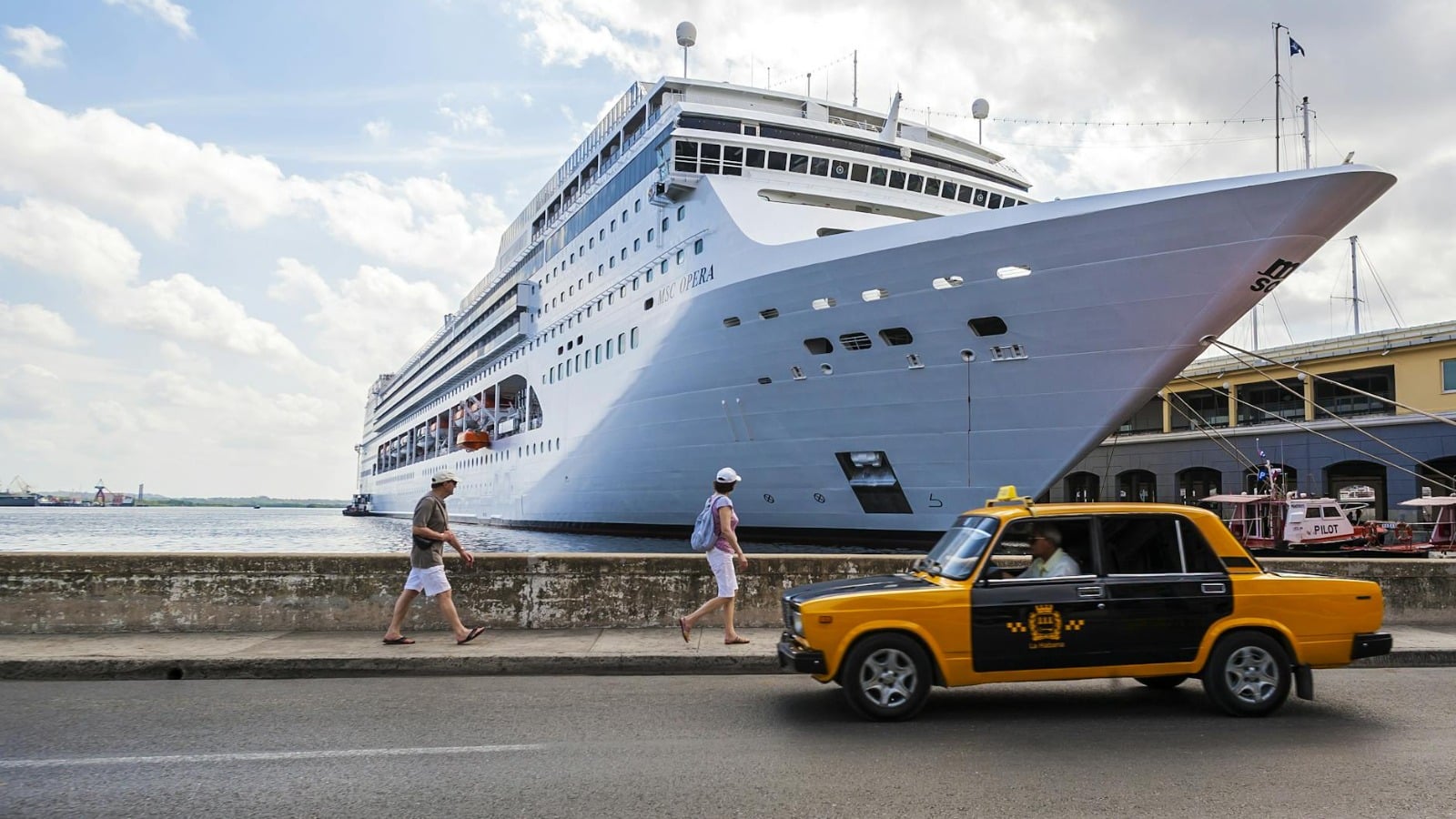
The U.S. Supreme Court has put Carnival, Royal Caribbean, Norwegian, and MSC Cruises back on the hook for a $439 million judgment tied to their cruises to Havana between 2016 and 2019.
In an 8-1 ruling on Thursday, May 21, the justices sided with Havana Docks Corporation, the American company that once held the rights to the Havana cruise terminal before Cuba seized it in 1960. The decision throws out an appeals-court ruling that had wiped the judgment away two years ago, and sends the fight back to the lower courts.
Here’s what the court decided, how a six-decade-old property seizure ended up in front of the justices, and what it means for any hope of cruise ships returning to Cuba.
What The Supreme Court Actually Ruled
The vote was 8-1, with Justice Clarence Thomas writing for the majority and Justice Elena Kagan the lone dissenter. The court found that the four cruise lines used confiscated property to which Havana Docks owns the claim, and that the lower appeals court had read the law wrong when it dismissed the case.
That revives the $439 million judgment a Miami federal judge first ordered. Most news outlets have rounded it to roughly $440 million in combined damages, interest, and fees.

Photo by KATRIN BOLOVTSOVA on Pexels
One important catch: the ruling does not end the case or force an immediate payout. The justices vacated the appeals-court decision and sent the dispute back down, which leaves the cruise lines free to argue other defenses they haven’t yet had ruled on. In a joint statement, Carnival and Royal Caribbean said they were disappointed but intend to keep pressing those arguments in the 11th Circuit. Norwegian declined to comment on active litigation, and MSC did not immediately respond.
How A 1960 Port Seizure Led To A 2026 Ruling
To see how cruise vacations turned into a nine-figure legal headache, you have to go back well before any modern ship docked in Havana.
Havana Docks built and operated the port’s main cruise terminal in the early 20th century under a long-term concession. In 1960, shortly after Fidel Castro’s government took power, Cuba confiscated that property without paying for it. A U.S. claims commission later valued the loss at about $9 million.
Decades on, in 1996, Congress passed the Helms-Burton Act. A section of it, Title III, lets U.S. nationals sue any company that “traffics in” property the Cuban government seized. For more than 20 years, presidents from both parties suspended that provision to avoid diplomatic and business fallout. That changed in May 2019, when the Trump administration activated it for the first time.
Havana Docks sued within weeks. Its targets were Carnival, Royal Caribbean, Norwegian, and MSC, which had carried close to a million passengers through the terminal after Cuba reopened to cruise ships in 2016.
The “Expired Lease” Argument That Nearly Worked
The cruise lines’ main defense came down to a calendar. Havana Docks’ concession to run the terminal was set to expire in 2004. Since the ships didn’t start calling until 2016, the lines argued, Havana Docks wouldn’t have controlled the pier by then anyway, so there was nothing left to “traffic” in.

Photo by Joan Costa on Pexels
A federal district judge in Miami rejected that reasoning and entered judgment against all four lines. Then, in October 2024, a divided 11th Circuit panel sided with the cruise lines and threw the award out, agreeing that the expired concession broke the chain of liability.
The Supreme Court disagreed. Under the majority’s reading, a company that uses confiscated property can be liable to whoever holds the claim to it, even if the original owner’s interest would have lapsed on its own years earlier. Kagan’s dissent argued the reverse: that Havana Docks held only a time-limited right that ran out in 2004, and that the majority was letting it recover for property that was no longer its own. Justice Sonia Sotomayor, in a concurrence joined by Justice Brett Kavanaugh, agreed with the outcome but flagged worries that the reasoning could let claimants collect over and over from anyone who ever uses the docks.
What This Means For Cruisers
If you have a cruise booked, this ruling changes nothing about your fare, your itinerary, or your sailing. No ship has called in Havana since 2019, and today’s Caribbean itineraries lean on the Bahamas, the eastern and western Caribbean, and the lines’ private islands instead. This is a corporate liability fight, not a passenger-facing policy change.
Where it matters is the bigger picture. A combined judgment in the hundreds of millions is real money even for companies this size, and the case keeps Havana firmly in the “do not touch” column for legal teams. I’d read this less as a one-time penalty and more as the courts drawing a hard line around Cuban port property that the lines now have to respect.
The lines weren’t acting as rogue operators at the time, either. Between 2016 and 2019, the U.S. government actively encouraged “people-to-people” educational travel to Cuba, and the cruises ran under federal approval. The legal exposure only crystallized after the rules shifted under them.
Will Cruise Ships Ever Return To Cuba?
For anyone hoping Havana rejoins the short-Caribbean rotation, this makes that return harder, not easier. The window of Cuba cruises from 2016 to 2019 had already closed years before Ryan and I took our first sailing, and the ruling adds a fresh legal reason for lines to stay away.
By confirming that using the terminal counts as trafficking in seized property, the court has effectively told operators that any future Havana call carries open legal risk until these claims are resolved. Even a genuine thaw in U.S.-Cuba relations wouldn’t erase that overnight.
What’s left to watch is the remand. The cruise lines still have unresolved defenses to argue in the 11th Circuit, and a related Helms-Burton case involving Exxon Mobil is moving through the courts on similar questions. We’ll be tracking both alongside the rest of our cruise news coverage.
For now, that brief stretch of Havana sailings looks like a blip in cruise history that a lot of people would love to see come back. If Cuba reopened to cruise ships tomorrow, would you book it, or has the legal mess soured the idea for you?

We took a Cuba cruise during those years and loved it. I would absolutely do it again.