
Most people obsess over the wrong number when they book a cruise.
They hunt for the lowest fare, feel good about the deal, then watch the final bill land at double what the fare said.
The fare is the cheap part.
The money leaks out everywhere after that, in the drinks, the excursions, the Wi-Fi, the little “yes” you say a dozen times a day without thinking about it.
The good news is that almost none of it is fixed. A cruise is one of the most flexible vacations there is for controlling spend, once you know which levers actually matter.
Here’s where we’d focus, in rough order of how much money it saves you.
Your Fare Is the Cheapest Part of a Cruise
Think of a cruise as two separate purchases.
There’s the fare, which gets you the cabin, the food in the main dining room and buffet, most entertainment, and the pool.
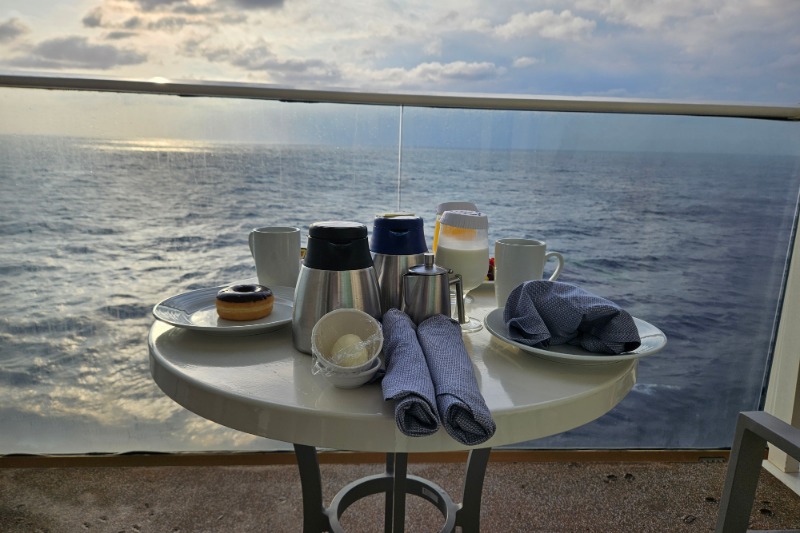
Our balcony view for our booked cabin
Then there’s everything the cruise line hopes you’ll add: drink packages, specialty dining, shore excursions, spa, photos, internet, and the casino.
That second bucket is where a $700 cruise becomes a $1,600 cruise.
So the biggest savings don’t come from shaving $40 off the fare. They come from being deliberate about the extras, most of which are optional and heavily marked up. We break down a lot of those in our look at the extras that quietly pad your bill.
Once you see a cruise as fare plus extras, every tip below starts to make more sense.
Book When the Deals Actually Show Up
Cruise pricing isn’t random, but it isn’t a straight line either.
The cheapest moment to book is usually not “as early as possible” or “at the last minute.” It’s the sweet spot in between, and it shifts by itinerary.
Two windows matter most. The first is what the industry calls wave season, roughly January into March, when the lines pile on perks like onboard credit, free drink packages, and reduced deposits, and it’s often the best stretch to book for a deal. The second is the final few weeks before a sailing, when unsold cabins get discounted to avoid sailing empty.
Here’s the honest tradeoff between the two:
| Approach | Best for | The tradeoff |
|---|---|---|
| Book early (6–18 months out) | Popular sailings, specific cabins, summer and holidays | You pay a bit more, but you get the cabin and itinerary you want |
| Wait for last-minute | Flexible travelers near a drive-to port | Big discounts are possible, but selection is thin and flights get pricey |
If you have a specific ship, cabin, or holiday week in mind, book early and lock it in. If you’re flexible on dates and live near a port you can drive to, waiting can pay off.
Torn between the two? We weigh whether to grab it early or hold out for a last-minute deal in its own guide.
Keep Watching the Price After You Book
This is the tip almost nobody uses, and it’s basically free money.
Cruise fares move constantly after you book. If the price of your cabin category drops before final payment, most lines will honor the lower price or hand you the difference as onboard credit. You usually just have to ask.
So don’t book and forget.

We constantly look for deals and price drops, even on our trips
Check your sailing’s price every couple of weeks, or set an alert. On our own bookings we’ve watched the same cabin swing by a few hundred dollars in a single month.
A quick call or a message to your travel agent when the price dips can put that difference right back in your pocket, or into onboard credit you’ll spend anyway.
Sail When Nobody Else Wants To
The single biggest fare lever is when you go.
School holidays, summer, Christmas, and New Year’s are the most expensive weeks of the year, because that’s when everyone with kids is forced to travel. If you can avoid them, you’ll pay dramatically less for the exact same ship.
Shoulder season is the sweet spot. Think late spring, early fall, and the stretches right after the holidays. Same Caribbean, smaller crowds, lower fares.
Repositioning cruises are the other hidden deal. When a ship moves between regions for the season, say from the Caribbean to Europe in spring, it sails a one-way route that’s often heavily discounted and loaded with relaxing sea days. You trade a bit of convenience (you fly home from a different city) for a genuinely cheaper, quieter cruise.
If your calendar is even slightly flexible, this one tip can save more than every onboard hack combined.
Get to the Port Without Booking a Flight
Flights are often the most expensive line on a cruise budget, and they’re the part people forget to factor in.
A “cheap” cruise stops being cheap the second you add two plane tickets, airport parking, and a pre-cruise hotel because your flight lands too late to board safely.
So look at what you can drive to first.
There are cruise ports up and down both US coasts, and many cruisers can reach one within a few hours. Driving means no baggage fees, no flight risk, and you can throw a case of water and a suitcase of snacks in the trunk without thinking about it.
Our own first cruise sailed out of Baltimore, a short drive for us, and skipping flights entirely took a big chunk out of the budget and all of the stress out of embarkation day.
We just parked and walked on.
If you do have to fly, build in a night before at a hotel with a park-and-cruise package. It’s cheaper than missing the ship.
The Cabin Is Where You Save Real Money
The gap between the cheapest and most expensive cabin on the same ship can run into the thousands.
And here’s the thing new cruisers rarely believe until they sail: you spend far less time in your cabin than you’d think.
Between the pool, the dining rooms, the shows, the ports, and the bars, the cabin is mostly for sleeping and showering. On a busy, port-heavy itinerary, a fancy cabin can be money spent on a room you barely see in daylight.
There are a few ways to play the cabin to save real money:
| Play | How it saves | Watch out for |
|---|---|---|
| Book an interior cabin | Cheapest room on the ship, often by hundreds | No natural light; some sleepers love it, some feel boxed in |
| Book a “guarantee” cabin | You pick the category, the line picks the exact room, usually at a discount | You don’t choose your location, and you might land under a noisy deck |
| Sail an older or smaller ship | Same line, lower fares than the newest mega-ships | Fewer bells and whistles, but often a calmer, more relaxed cruise |
What we learned: we sailed an oceanview cabin with no balcony on a 5-night Bermuda run and honestly didn’t miss the balcony once, we were off the ship or out at the pool most of the day.
Whether the view is worth the upcharge really depends on your itinerary, which is exactly what we dig into in our take on whether a balcony is worth paying for.
Bid for an Upgrade the Smart Way
If you booked a modest cabin but secretly want more, there’s a back door that can be great value: the upgrade bid.
Most major lines run one. Royal Caribbean calls it RoyalUp, Celebrity has MoveUp, and Norwegian runs Upgrade Advantage. You get an email before sailing inviting you to name a price for a better cabin category, and you only pay if the line accepts your bid.
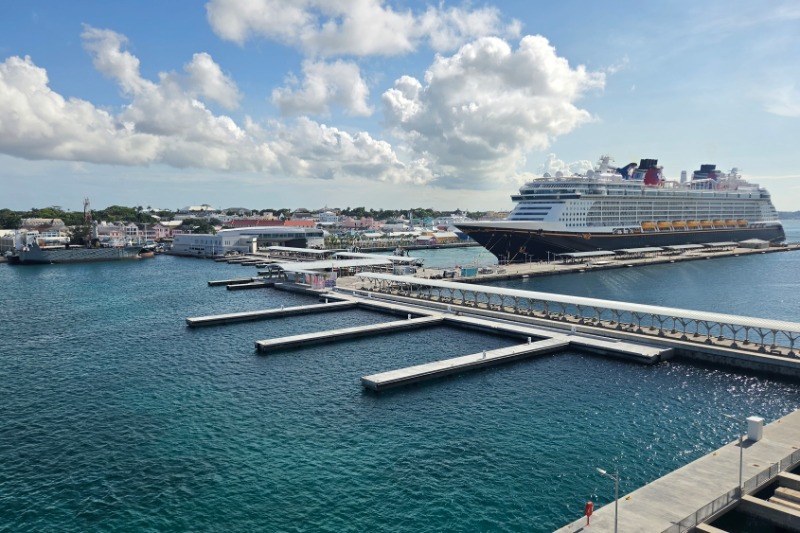
Disney cruise ship at Nassau port
Carnival works a little differently. Instead of a true auction, it emails a take-it-or-leave-it upgrade offer to some guests.
The play here is simple. Book the cheap cabin you’re happy with, then bid low on the upgrade.
If it hits, you got a suite for a fraction of the sticker price. If it doesn’t, you keep the cabin you already liked and pay nothing extra.
Heads up: upgrade bids are usually charged per person, not per cabin, and once the line accepts your bid it’s nonrefundable. Bid what the upgrade is genuinely worth to you, not the maximum the slider allows.
To even get the invitation, opt into the cruise line’s marketing emails after you book. No opt-in, no offer.
Don’t Pay the Cruise Line’s Markup in Port
Shore excursions booked through the cruise line are convenient, and you pay for that convenience.
The exact same catamaran trip, beach day, or city tour is very often available directly from a local operator for a good bit less, sometimes half.
You can book independent tours ahead of time, or in many ports simply walk off and arrange something at the pier or with a reputable local company you researched beforehand.
There’s a real tradeoff to name here. If you book through the cruise line and your tour runs late, the ship waits for you. If you book independently and miss the all-aboard time, the ship leaves without you.
So we’d book independently in easy, walkable ports where you’re not going far, and lean toward the cruise line’s tour when you’re traveling a long way inland or somewhere unfamiliar.
And in plenty of ports, the cheapest excursion is no excursion. A ship’s beach-break tour can easily run $70 or more per person for sand you could reach on a short cab ride.
Walk into town, find a beach, grab lunch where the locals eat, and spend nothing but a taxi fare.
The Drinks and Wi-Fi Traps
Onboard spending is where budgets quietly blow up, and drinks lead the pack.
A drink package looks like a no-brainer until you do the math. To break even, you often need to drink more per day than most people actually want to. If you have a couple of drinks with dinner and call it a night, paying as you go is usually cheaper.
Run the numbers for your own habits before you buy. We walk through exactly how to run the drink package math so it fits your trip, not the brochure’s.
There’s also a family loophole worth knowing. On lines like Royal Caribbean, if one adult in a cabin buys the alcohol package, every adult in that cabin has to buy it too. Booking drinkers and non-drinkers in separate cabins can dodge that rule entirely.

Drinks on our Oasis of the Seas cruise
You can also just bring your own. Royal Caribbean, for example, lets each adult carry on one sealed 750ml bottle of wine or champagne on embarkation day, plus up to 12 cans or cartons of non-alcoholic drinks per stateroom. Policies vary by line, so check yours, but that alone can cover your water and soda for the week.
Specialty restaurants are the same story. They’re a nice night out, but the main dining room and buffet are already included, and on the big lines they’re actually good.
If you want a specialty dinner as a treat, book it through the cruise planner before you sail. Pre-cruise dining packages usually run cheaper than reserving onboard, and eating in the included venues the rest of the week costs you nothing.
Tip: pre-buy bottled water through the cruise planner before you sail, or carry on your 12 allowed cans. Paying $4 for a bottle of water at the pool bar adds up faster than any single splurge.
Wi-Fi is the other trap. It’s expensive, and honestly, half the appeal of a cruise is disconnecting.
If you can, skip the package and use free port Wi-Fi at a café when you’re ashore. And take advantage of the freebies already baked into your fare before you pay for anything extra.
The Free Onboard Credit Almost Nobody Claims
This one feels like a cheat code, so stick with me.
If you buy 100 shares of the parent company behind your cruise line, you get onboard credit on every future sailing, for as long as you hold the shares.
Carnival Corporation, which owns Carnival, Princess, Holland America, and Cunard, gives shareholders who hold 100 shares up to $250 in onboard credit per stateroom, scaled to cruise length: $50 for sailings of six days or fewer, $100 for seven to 13 days, and $250 for 14 days or more, on its US-dollar brands. Royal Caribbean Group and Norwegian’s parent company run near-identical programs for their own lines.
On a typical 7-night cruise, that’s $100 of free spending money, every single time you sail.
Heads up: you claim the credit ahead of time (Carnival’s window is at least three weeks before departure through its shareholder app), and it can’t be used for gratuities or the casino. It’s also one credit per stateroom, not per person. And to be clear, buying any stock is a risk and we’re not financial advisors, this only makes sense if you already cruise often.
For frequent cruisers, though, the credit can pay back the cost of the shares surprisingly fast.
Status Matches, Credit Cards, and When to Use an Agent
A few smaller plays round things out.
If you’ve earned loyalty status with one cruise line, another line may match it to get you to switch. It’s worth a quick search before you book a new line, since a matched tier can hand you perks like priority boarding or free drinks in certain lounges without sailing a single night to earn them. These programs change often, so confirm the current offer directly with the line.
Co-branded cruise credit cards are another slow-burn win if you’re loyal to one line. They typically earn points toward onboard credit or future cruise discounts.
Just don’t chase one unless you’d pay the card off in full anyway. Interest wipes out any perk fast.
And don’t overlook a good travel agent. A cruise-focused agent often has access to group rates and perks you can’t see online, and they cost you nothing, since they’re paid by the cruise line. When your price drops, they’re also the ones who’ll chase the adjustment for you.
None of these is a jackpot on its own. Stacked together, they add up.
Putting It All Together
The cruisers who spend the least aren’t the ones who suffer through a bare-bones trip. They’re the ones who paid for the things that matter to them and quietly skipped the markups that don’t.
Sail in the off weeks, drive to the port if you can, book the cabin you’ll actually use, and be honest about whether you’ll drink enough to justify the package. Do those four things and you’ve already saved more than every small hack combined.
Then let the little wins, watching the price, bidding low on an upgrade, claiming that onboard credit, be the cherry on top.
What’s the one cruise expense you wish you’d skipped, or the money-saving trick you swear by? We’d love to hear what’s worked for you.