
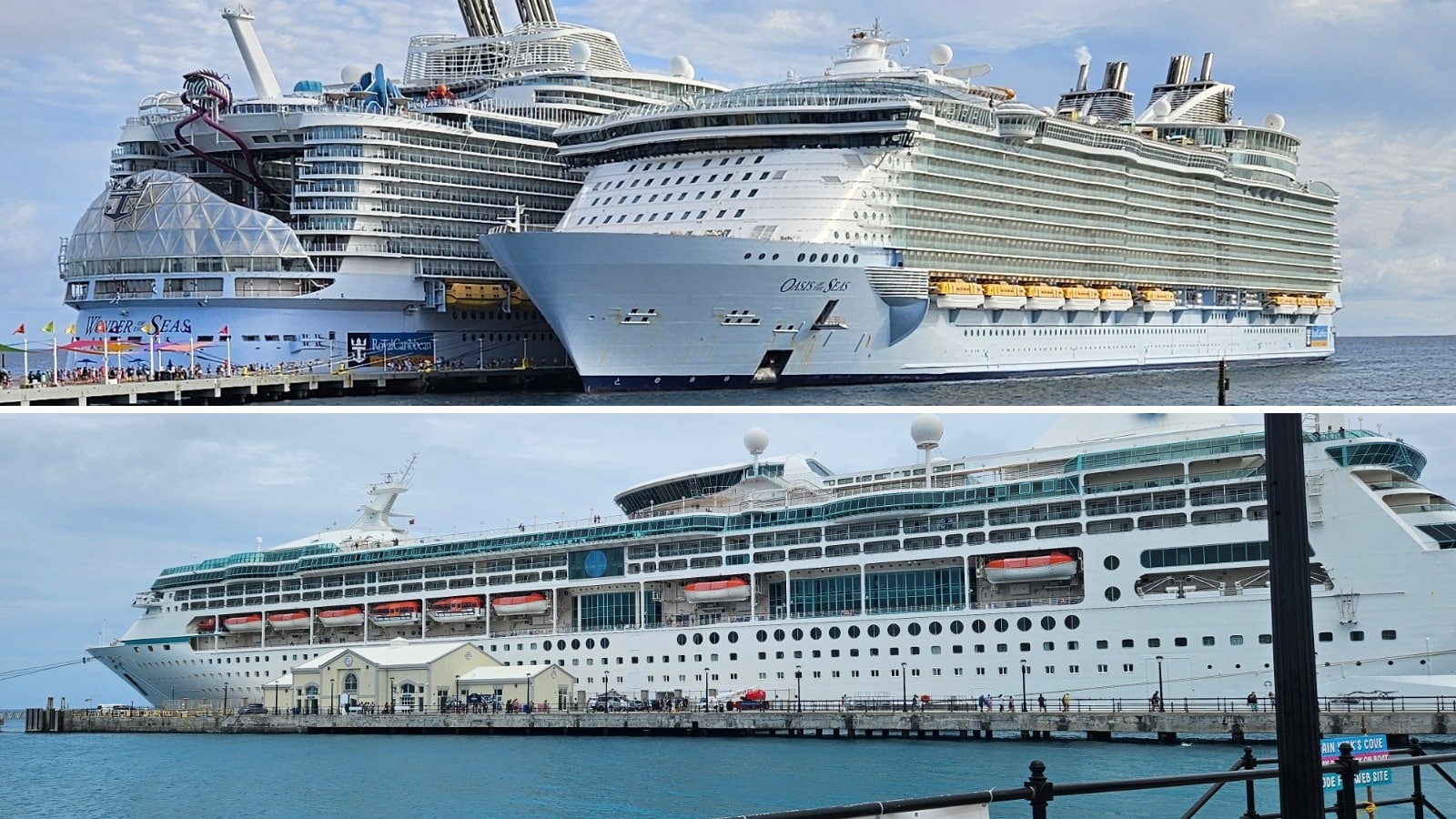
Most big ship versus small ship articles are written by someone who has only sailed one of them.
We got lucky with the timing on this one.
In June 2025 we sailed Vision of the Seas, one of the smallest ships in Royal Caribbean’s fleet. Twelve months later we sailed Oasis of the Seas, one of the largest.
Same cruise line. Same two people. Same year.
The differences were not the ones I expected going in, and the thing I miss most about the small ship isn’t on any spec sheet.
The Two Ships We’re Comparing
Vision of the Seas was our first cruise. A 5-night Baltimore to Bermuda run in an oceanview cabin, and we covered it fully in our Vision review.
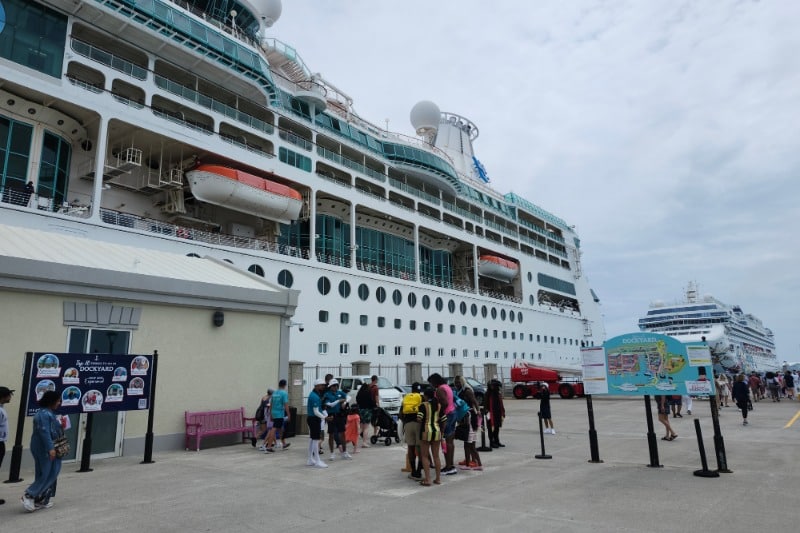
Vision of the Seas Cruise at Bermuda
Oasis of the Seas was our second. A 7-night out of Cape Liberty to the Bahamas in a balcony cabin, written up in our Oasis review.
This article is the comparison neither of those posts could make on its own.
| Vision of the Seas | Oasis of the Seas | |
|---|---|---|
| Debuted | 1998 | 2009, refurbished 2019 |
| Size | Around 78,000 gross tons | Around 226,000 gross tons |
| Guests | Roughly 2,000 | Roughly 5,500 at double occupancy |
| Class | Vision, Royal’s smallest | Oasis, second largest in the fleet |
Roughly three times the ship and nearly three times the people.
Walking On Board Is A Completely Different Feeling
This is the part nobody prepared us for.
Boarding Oasis, we were immediately overwhelmed. You come in at the Royal Promenade, and it’s shops and bars and people in every direction at once.
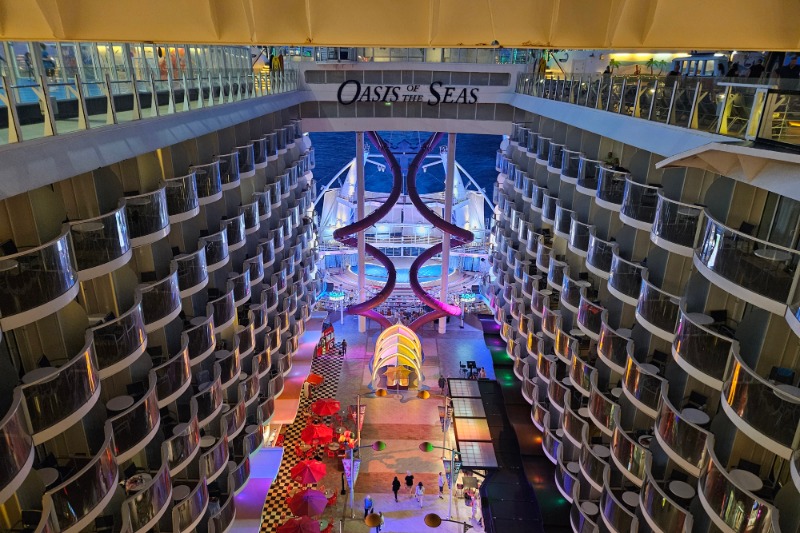
Oasis of the Seas was a massive difference compared to Vision of the Seas
It took a while to get our bearings. Not an hour, more like a day or two before the ship stopped feeling like a maze.
Vision was the opposite. Boarding felt calm and welcoming, there weren’t many people in the way, and we could figure out the layout almost immediately.
If your first cruise is on a megaship, know that the first few hours can feel like walking into a mall you’ve never been to while dragging a carry-on.
Heads up: On a big ship, spend twenty minutes on day one just walking the ship end to end. We didn’t, and we wasted the first two days getting turned around.
The Crowds Show Up In Small Moments
The crowd difference doesn’t hit you in one dramatic way. It shows up in the boring parts of the day.
Getting coffee in the morning on Oasis meant a line. On Vision it didn’t.
That’s the pattern across the whole trip. Big ship, more people between you and whatever you’re trying to do.
The counterweight is real though. Oasis is designed to absorb thousands of people, and there are enough venues that the ship rarely felt genuinely packed, just busier at the pinch points.
Dining Felt More Personal On The Smaller Ship
Here’s where Vision won outright, and it surprised me.
The main dining room on Vision felt personable in a way Oasis didn’t. Our servers talked to us, asked about our day, actually wanted to get to know us.
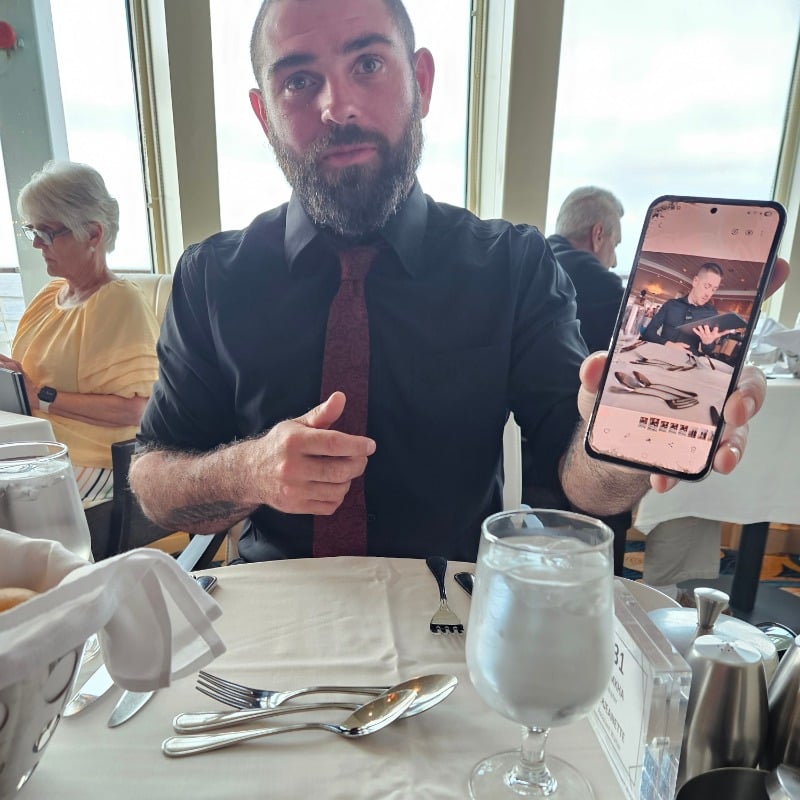
Main dining room on Vision of the Seas
I’d guess it comes down to table counts. Fewer guests means fewer tables per server and more room for an actual conversation.
I genuinely liked the main dining room more on the smaller ship, which is not something I expected to write.
Oasis has far more variety, and the food itself was good. El Loco Fresh, the free Mexican spot on Oasis-class ships, had the best tacos we ate all week and it didn’t cost anything extra.
What we learned: If the dining room experience matters to you more than menu variety, the smaller ship is the better bet. We’d have traded a few Oasis venues for another week of those Vision servers.
Where The Big Ship Actually Wins
Oasis has more to do, and it isn’t close.
Waterslides, multiple pools, a FlowRider, and a theater that’s a clear step up from Vision’s. Vision’s theater is perfectly nice, it just isn’t in the same category.
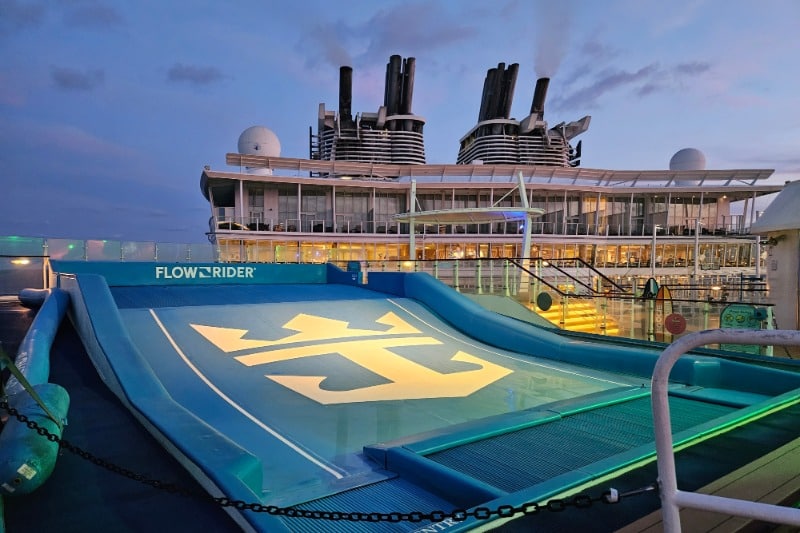
Flow Rider is a must on Oasis of the Seas
Then there’s the AquaTheater, the outdoor dive and aerial venue that only exists on Oasis-class ships. Nothing on a smaller ship compares.
If you’re cruising with kids, or you’re the type who wants the ship itself to be the destination, this is the whole argument for going big.
We had a great time on Oasis. I’d sail it again.
Getting Off The Ship Was Not Close
Disembarkation is where the size difference stops being a preference and starts being time out of your day.
We were off Vision within minutes. Baltimore was smooth, we carried our own bags, and it never felt overwhelming. More on that in our Cruise Maryland Terminal guide.

Port of Baltimore was very smooth for us
Oasis took considerably longer, and the area outside the terminal at Cape Liberty was extremely crowded.
That’s not really Oasis’s fault. It’s math. Getting 5,500 people off a ship takes longer than getting 2,000 off, and the terminal has to absorb all of them at once.
Factor it into your travel plans if you have a flight or a long drive home.
The Private Island Myth We Believed
Going in, I assumed the smaller ships didn’t visit Royal Caribbean’s private islands, and that this was a big-ship perk.
That’s wrong, and I’m glad we checked before publishing it.
Cruise Critic has documented Vision of the Seas docked at Perfect Day at CocoCay alongside Utopia of the Seas, and Royal deploys ships from every class to the island. The pier there handles two ships at once, so there’s no tendering involved.
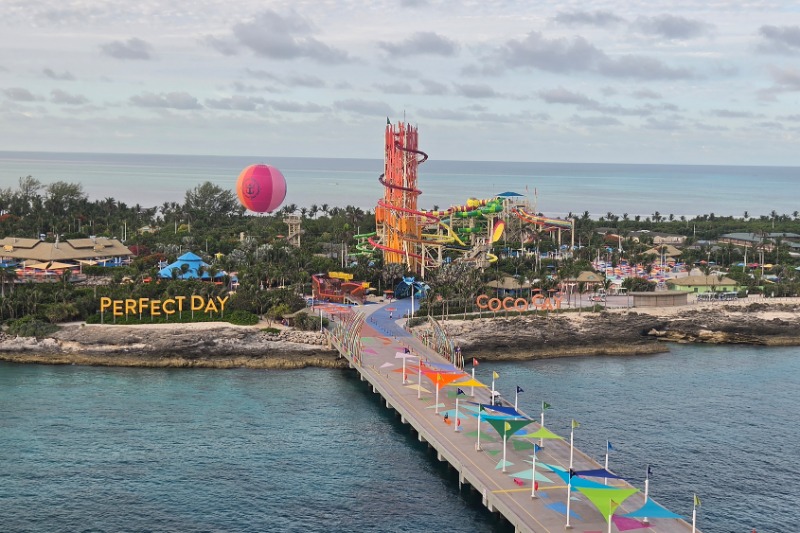
Perfect Day Coco Cay is a very fun experience and highly recommended
What’s true is narrower. Our Vision itinerary went to Bermuda, not the Bahamas, so we didn’t get CocoCay on that sailing. That’s an itinerary difference, not a ship size one.
If a private island day matters to you, check the itinerary rather than the ship size. We broke down what CocoCay actually costs once you’re there separately.
The Best Thing About The Small Ship Isn’t A Feature
On Vision, the adults-only pool area wasn’t crowded. Neither was the hot tub.
We started seeing the same faces. We’d make small talk, recognize people from the day before, pick up conversations.
That doesn’t happen on a ship with 5,500 people. It structurally can’t.
It’s the single thing I miss most about the smaller ship, and it’s the one thing no amount of waterslides replaces.
What About The Price Difference?
I’ll be honest that I don’t remember the exact fares.
My recollection is that Vision came in close to $500 cheaper than Oasis.
But that comparison isn’t clean, and I’d rather say so than pretend it is.
Vision was 5 nights in an oceanview cabin. Oasis was 7 nights in a balcony. Two extra nights and a cabin upgrade explain a lot of that gap on their own.
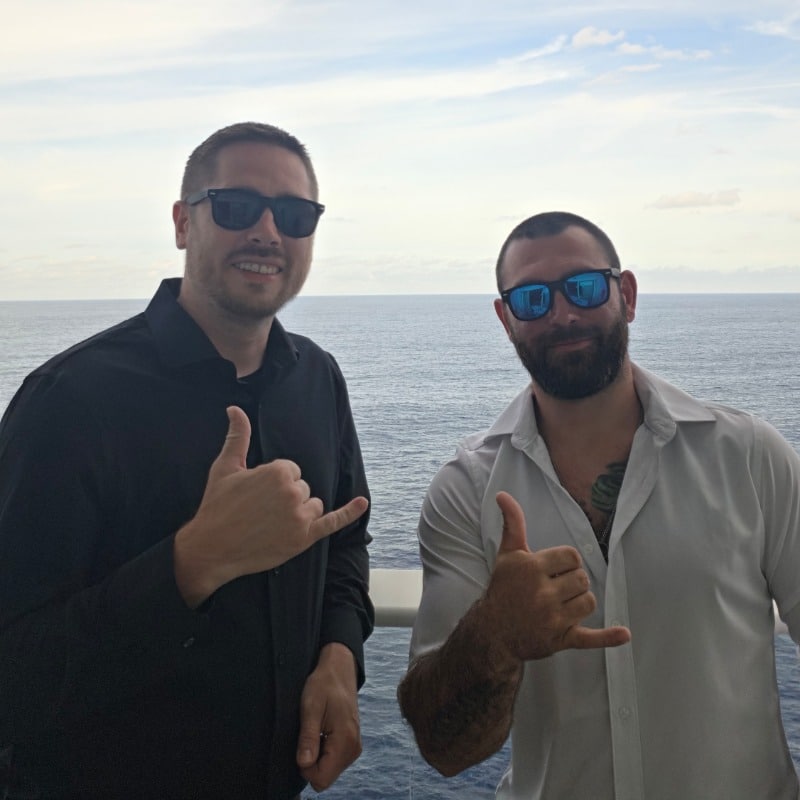
Getting a balcony is probably a top priority from now on when we book a cruise
The fair takeaway is directional. Older, smaller ships generally price lower than the newest megaships for a comparable cabin, but run your own numbers on the specific sailings you’re considering rather than trusting a rule of thumb. If you’re weighing the cabin side of that math, we went through whether a balcony is worth paying for after sailing both ways.
Does The Smaller Ship Feel Rougher?
This is the question people ask us most, and I want to be careful answering it.
Physics is on the big ship’s side. Larger vessels have more mass and more sophisticated stabilizers, so they generally ride through swells with less motion than a smaller ship in the same water.
Neither of our sailings was rough, so I can’t tell you from experience what Vision feels like in bad weather.
What I can say is that we noticed more movement on the smaller ship even in calm conditions. Nothing unpleasant, just present in a way it wasn’t on Oasis.
If you already know you’re prone to motion sickness, that’s a real point in the megaship’s favor, and it’s worth weighing against everything else here.
Read more: We went through the seasickness question in detail in our guide to staying healthy on a cruise.
Which One We’d Send A First-Timer To
The smaller ship, and especially on a shorter itinerary.
Two reasons.
If you turn out not to like cruising, or you get seasick, a 5-night sailing is a much smaller commitment than a 7-night one. You find out cheaply.
And you won’t spend your first two days disoriented. A smaller ship lets you actually learn what cruising is before adding 5,000 people and eight neighborhoods to the equation.
Tip: If you’re stuck between two sailings, look at the passenger count before the amenity list. It tells you more about what the week will feel like. Our step-by-step guide to choosing a first cruise walks through the rest.
Our Rule Going Forward
Here’s where we landed after doing both within a year.
I’ll always do a smaller ship after a bigger one.
Not instead of. After. The big ship is the spectacle and the small ship is the recovery, and alternating them means neither one gets old.
Oasis gave us more to do, better entertainment, and the best tacos of the trip. Vision gave us calmer mornings, servers who knew our names, and a hot tub we could actually get into.
If I had to keep only one of those, I’d keep the second one. That’s not the answer I expected when we booked the big ship.
Have you sailed both a megaship and a smaller one? Which did you like better, and did it surprise you?