
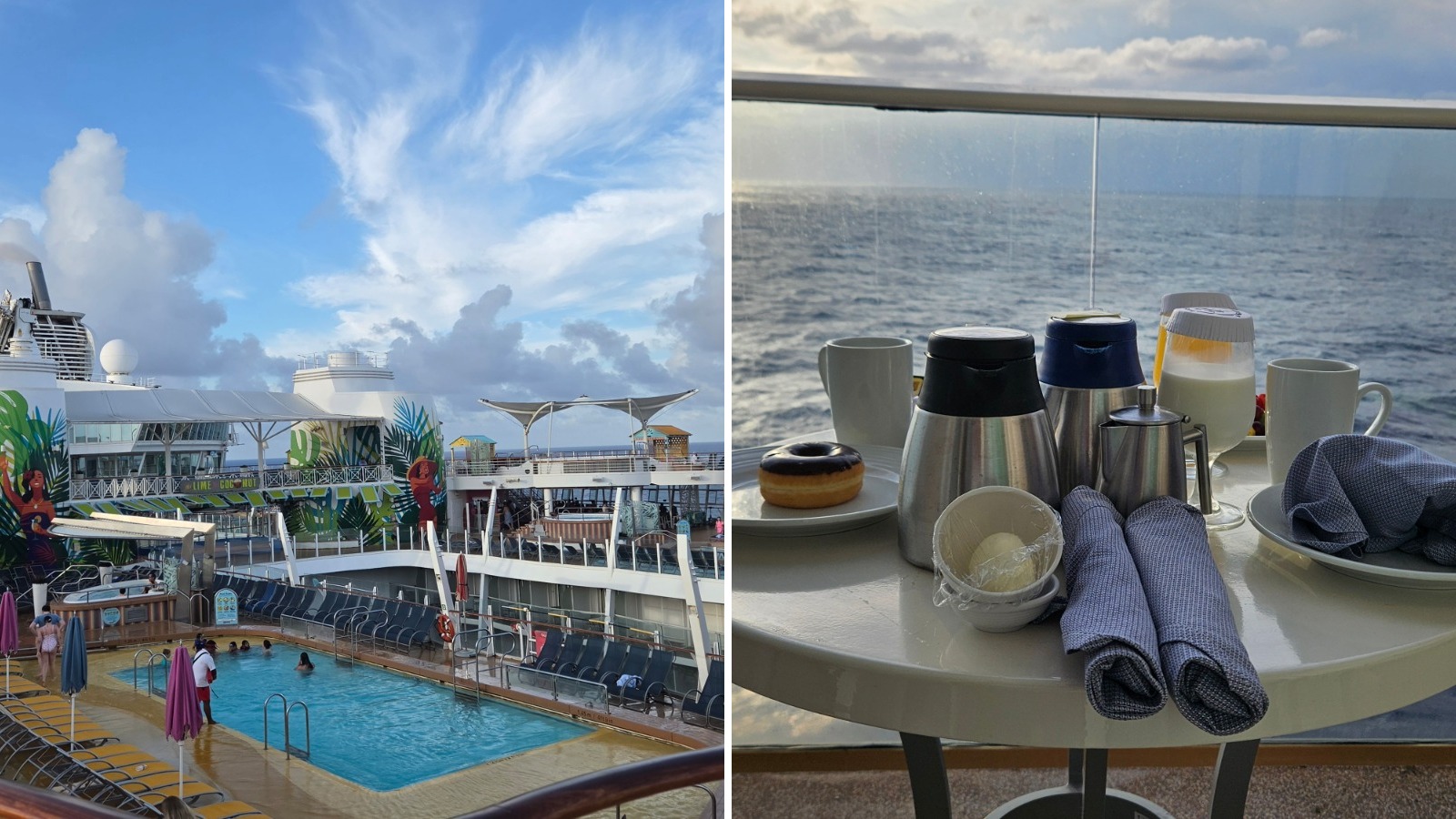
There’s a whole category of cruise question people won’t type into a Facebook group.
Not because the question is dumb.
Because the replies are worse than not knowing.
You ask whether the main dining room costs extra, and four people tell you to just Google it, one person answers a question you didn’t ask, and somebody posts a photo of their drink.
We had most of these questions before our first sailing out of Baltimore in June 2025, and I’ll admit we guessed at half of them.
A few of the guesses were wrong.
Here are eleven of them answered properly, including the part nobody mentions after they say “yes, it’s free.”
1. Is The Main Dining Room Actually Free?
Yes. It’s included in your fare, every night of the cruise, and you don’t pay a cover to walk in.
This is probably the single most common first-timer misunderstanding, and it costs people real quality on their vacation.
New cruisers assume the buffet is the free option and the sit-down restaurant with tablecloths and waiters must be the paid one. It’s backwards.
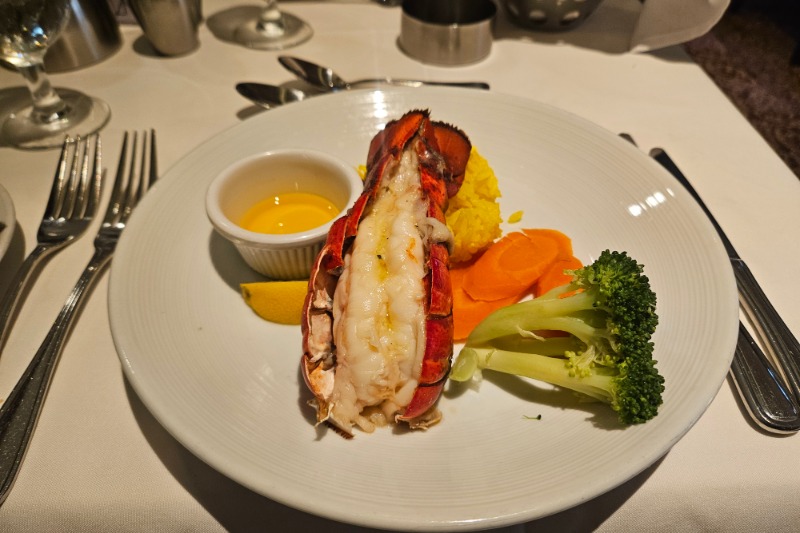
Main Dining Room is absolutely free. Sometimes they have lobster tail night!
The main dining room, the buffet, poolside pizza and burgers, the café with pastries and sandwiches, and soft-serve ice cream are all included on the major mainstream lines. There’s more included in your fare than most people ever use.
There are two things worth knowing before you order.
The dining room isn’t open all day. It runs set hours for breakfast, sometimes lunch on sea days, and dinner, and plenty of first-timers show up at 3pm to find it closed.
And a handful of premium items on the menu carry a surcharge on most lines, usually the higher-end steak or a second lobster tail. Ordering a second regular entrée because you couldn’t decide is free and completely normal.
The people who eat buffet food for seven straight nights because they thought the dining room cost money are the ones I feel bad for.
2. Is Coffee Free, Or Do I Need A Drink Package?
Basic drip coffee is free, and you don’t need a package to get it.
You’ll find it at the buffet, in the main dining room at breakfast, and usually at a café somewhere on the promenade. Tea, iced tea, lemonade, tap water, and juice at breakfast are included too.
What costs money is the good stuff.
Espresso drinks, lattes, cappuccinos, and anything from the branded coffee shop on board are all charged separately, and they are not cheap.
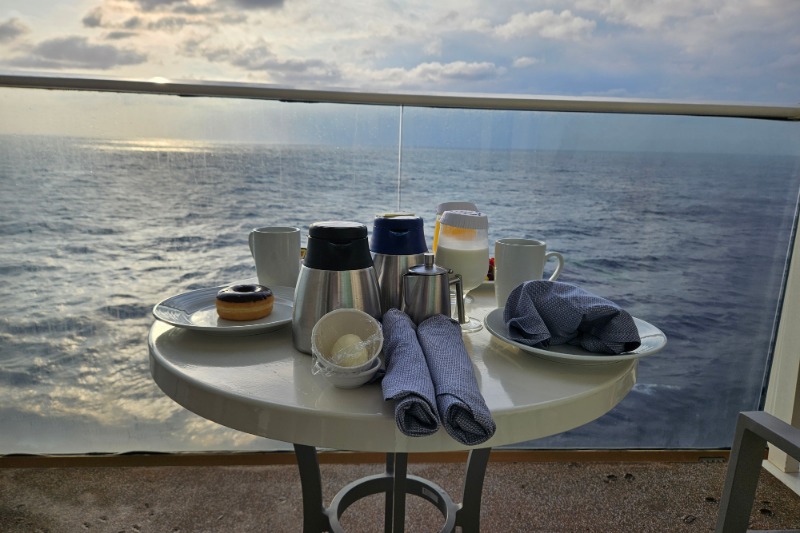
Coffee is also available for room service
So the honest answer depends on what kind of coffee drinker you are.
If you drink regular coffee with milk, you’re covered for free all week. If your morning doesn’t start without a proper flat white, you’re going to be paying for it or buying a specialty coffee package.
I’ll be blunt about the free coffee: it’s fine. It’s diner coffee. It does the job at 7am on a sea day and nobody’s writing home about it.
The math on whether a full beverage package makes sense is a separate question, and we ran the numbers properly in our breakdown of cruise drink packages.
3. Is Lunch Included On The Private Island?
Yes, and this one genuinely surprises people.
When your ship stops at the cruise line’s own island, lunch is included in what you’ve already paid. You’re not buying a beach day package to eat.
At Perfect Day at CocoCay it’s served buffet-style at a couple of casual spots on the island. Burgers, hot dogs, ribs, jerk chicken, rice and beans, salads, fruit.

Royal Caribbean private island, Coco Cay, has free food on the island like tacos!
It’s beach barbecue food and it’s better than it needs to be.
The catch is the hours. Lunch service is limited, generally over the middle of the day, and if you’re off doing something and roll up at 3pm looking for food, you’ve missed it.
Drinks are the other gap. Your drink package works on the island if you have one, but if you don’t, sodas and cocktails there are charged the same as they are on the ship.
What we learned: The island lunch is free, but almost everything with a line in front of it isn’t. The waterpark, the beach club, and the cabanas are all separate charges on top of the cruise fare. We wrote up exactly what we paid for and what we walked past at CocoCay after our June sailing.
4. Is The Water Safe To Drink?
Yes. Cruise ships produce and filter their own water on board, and it’s tested constantly.
The water coming out of your bathroom tap is the same water in the dispensers at the buffet.
It tastes slightly flat compared to what you’re used to at home, which throws some people, but there’s nothing wrong with it.
This matters more than it sounds, because bottled water on a cruise is a paid item on every major line. Buying it for a week adds up fast, and on some lines even basic bottled water isn’t included in the standard drink package.
Bring a refillable bottle and you’ve solved it.
One practical note that trips people up: many ships won’t let you hold your personal bottle under the buffet drink dispenser, because the spout touching your bottle is a contamination issue.
Fill a glass, pour it into your bottle, repeat. Slightly annoying, takes ten seconds, and it’s the rule on most ships whether or not anyone says anything.
5. Do I Have To Share A Bathroom?
No. Every standard cabin has its own bathroom with a toilet, sink, and shower.
Nobody is walking down a hallway in a robe with a toiletry bag. This question comes up because people are picturing a ferry, a hostel, or a train, and a cruise ship is none of those.
What you should actually brace for is the size.
Cruise ship bathrooms are small in a way that’s hard to communicate. On our first sailing the shower was a curved cylinder roughly the footprint of a phone booth, and the shower curtain has a well-documented tendency to attack you mid-rinse.
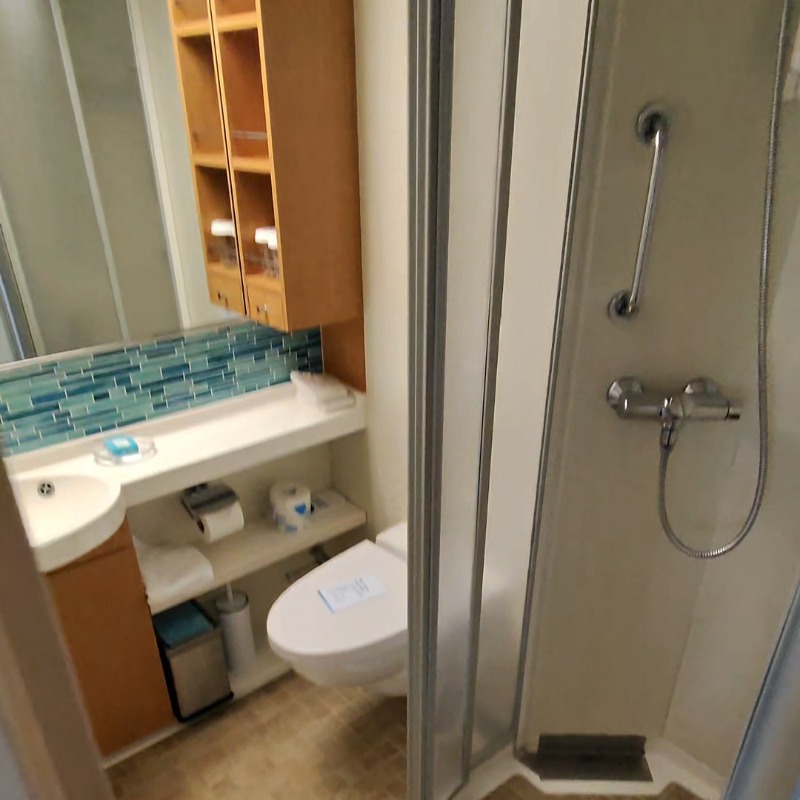
Cruise cabin bathrooms are typically smaller
That’s not a design flaw, it’s just physics and water pressure in a very small space.
Storage is the other thing. You typically get one narrow shelf and a mirror cabinet, which is not enough for two people with normal toiletries.
An over-the-door organizer hung on the bathroom door is the single most useful thing we’ve packed.
Higher categories change this. Mini-suites and full suites on most lines get a larger bathroom and sometimes a tub.
6. Is There A TV, And Can I Watch My Own Shows?
There’s a TV in every cabin. Whether it does what you want is another matter.
Royal Caribbean’s in-stateroom system runs 29 channels fleet-wide, and the mix leans heavily toward news channels, a few sports options depending on where you’re sailing, and ship information.
The genuinely useful channels are the ship ones. You can pull up your onboard account balance, check the day’s schedule, and watch the bridge camera, which is oddly hypnotic at sea.
Here’s the part that catches people out.
You can’t plug anything into the stateroom television. No streaming sticks, no gaming consoles, no DVD players, no laptops. Royal Caribbean’s policy is explicit about it, and it’s standard across the industry.
So the plan where you bring a Fire Stick and watch your own stuff doesn’t work.
Streaming from your phone or tablet is possible, but only on the higher-tier internet package that includes streaming, which has recently run around $20 per day. Cheaper packages will let you message and browse but choke on video.
The simplest answer is to download everything you want before you leave home.
Read more: The TV situation is one of a dozen small things that quietly cost money at sea. We covered the rest in what cruise lines don’t tell you about onboard costs.
7. Is There A Hairdryer, Or Should I Pack One?
There’s one in the cabin, and it’s almost never in the bathroom.
Check the desk drawer or the vanity area first. That’s where it lives on most ships, and people spend twenty minutes convinced their cabin didn’t get one.
Quality is roughly hotel standard, which is to say underpowered. If you have thick or long hair, it will take a while.
You’re allowed to bring your own, with one caveat worth reading carefully. Royal Caribbean’s policy notes that hair dryers may be prohibited depending on their specifications, so a high-wattage salon dryer is a gamble.
Curling irons and flat irons are explicitly permitted for personal use, so those are safe to pack.
What isn’t safe to pack is the thing people confuse them with.
Clothing irons and garment steamers are banned outright as a fire risk, and they’re among the most commonly confiscated items at embarkation. If you’ve ever walked past the table of pulled items at the end of a cruise, it’s mostly steamers.
For wrinkles, hang the garment in the bathroom while someone showers, or pay the ship’s pressing service.
8. Do I Need To Bring My Own Towels?
No, and you shouldn’t waste the suitcase space.
Bath towels are in your cabin and get replaced daily. Pool and beach towels are separate, and you pick those up from towel stations on the pool deck.
Now the part that generates more surprise charges than almost anything else on the ship.
Pool towels are checked out against your room card, and you’re expected to check them back in. Royal Caribbean charges $25 per unreturned towel, and Carnival charges $22.
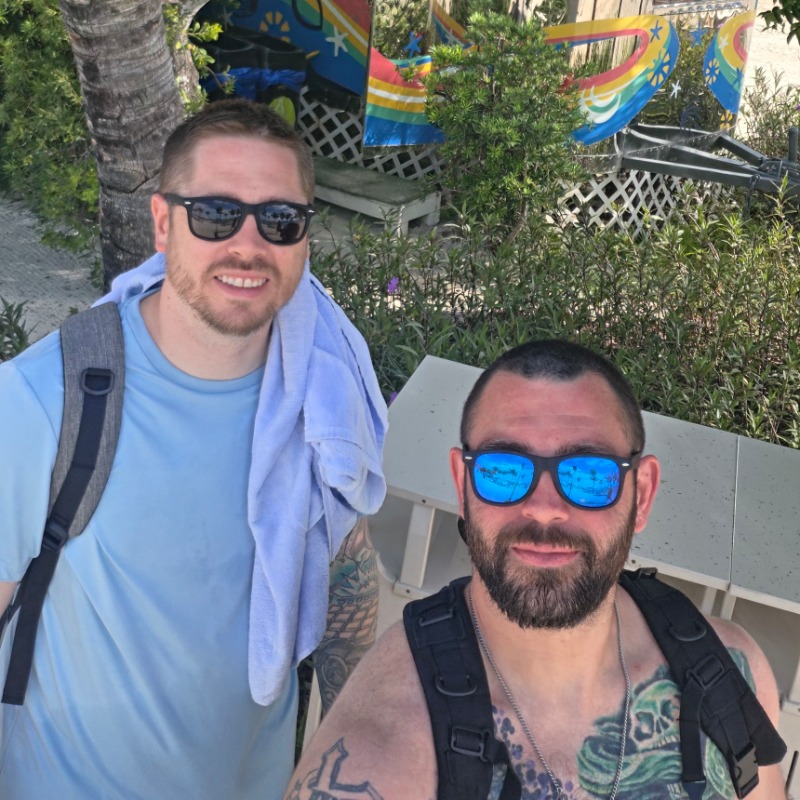
We took towels before we got off the ship for CocoCay. Royal Caribbean had a station set up to borrow towels. We returned them when we got back on the ship, no charge.
That sounds easy to avoid until you realize how the charge usually happens.
You take towels to the private island, hand them back in a crowd of people at the gangway, and nobody scans your card. Or your cabin steward tidies wet towels off the floor and they never get logged as returned.
Either way it lands on your account and you find out on the last morning.
Heads up: Check your onboard account on the app two nights before disembarkation, not on the final morning. Towel charges are reversible when you catch them with time to walk down to guest services, and a nightmare to sort out after you’ve flown home.
9. What’s A Pullman Bed?
A pullman is a bed that folds down out of the wall or the ceiling, bunk-style, above one of the main beds.
Cruise lines use them to fit a third or fourth guest into a cabin without permanently eating the floor space. During the day it folds away and the room looks normal.
Your cabin steward handles it. They pull it down during evening turndown and fold it back up while you’re at breakfast, so nobody in your party is wrestling with it.
There’s a small ladder and a guardrail. Kids generally love them, adults over about six feet generally don’t.
Here’s what actually matters when you’re booking.
If you’re putting three or four people in one cabin, check the deck plan to see whether that third berth is a pullman or a convertible sofa bed, because they’re very different experiences.
A sofa bed is more comfortable but takes up the sitting area every night. A pullman is less comfortable but disappears during the day, which in a small cabin counts for a lot.
Cabin choice generally is worth thinking through before you book, and we broke down whether the balcony upgrade is worth paying for if you’re weighing where to spend.
10. What’s A GTY Cabin, And Is It A Bad Idea?
GTY stands for guarantee. You book a category rather than a specific room, and the cruise line assigns you an actual cabin later, sometimes only days before you sail.
The appeal is price. Guarantee rates are usually lower than picking your own cabin in the same category, and you’re guaranteed at least the category you paid for. Occasionally you get bumped up.
The risk is location, and it’s a real risk.
You could land directly beneath the pool deck and hear chairs dragging at 6am. You could end up above the theater, all the way forward where the motion is worst, or beside a connecting door with a family of five behind it.
You also generally can’t request a change once the assignment lands.
My honest position is that a guarantee is a smart bet on a short three or four-night cruise where you’ll barely be in the room, and a bad bet if you’re prone to seasickness or a light sleeper.
If saving that money matters more than knowing where you’ll sleep, take it. If the thought of a bad cabin would nag at you for months beforehand, pay the difference.
We walk through the whole booking sequence in our step-by-step guide to booking a first cruise.
11. Can I Use My Phone At Sea?
You can, and that’s exactly the problem.
Once the ship reaches international waters, its own satellite network switches on. Your phone will show something like “Cellular at Sea” or the number 901, and it connects automatically without asking you.
Everything you do on it gets billed as maritime roaming, which most standard international plans do not cover. This is where the horror-story phone bills come from, and it’s usually somebody’s phone quietly syncing photos in a pocket.
Put your phone in airplane mode as you sail away, then turn wifi back on. That’s the whole trick.
If you actually need cellular service, the carriers sell day passes. Verizon’s Cruise Daily Pass and AT&T’s International Day Pass both run about $20 per line per day, and T-Mobile currently doesn’t offer a cruise data plan at all.
For most people the ship’s wifi package plus the cruise line app is the cheaper path. The app’s onboard messaging lets you find your travel companions without touching cellular.
Tip: Buy the internet package before you sail, not on board. Pre-cruise pricing is consistently lower, and it drops further during the line’s big promotional sales.
The Two That Actually Cost You Money
Most of these questions have friendly answers. The food is included, the water is fine, the towels are there, nobody’s sharing a bathroom.
The two that carry a real price tag are the phone and the flight.
A phone left off airplane mode can turn into a three-figure bill before you’ve finished unpacking, and a flight booked for 10am on disembarkation day is a genuinely stressful morning that no amount of planning fixes.
Everything else on this list is just information nobody bothered to tell you, which is a strange thing to feel embarrassed about.
What’s the cruise question you were too self-conscious to ask before your first sailing?